Many people pay attention to protein, vitamins and calories when planning their meals, but one important part of everyday nutrition often gets less attention: fibre. Fibre is found in plant-based foods such as fruits, vegetables, beans, lentils, nuts and whole grains. It supports normal digestion, and some types of fibre can also help people feel full for longer.
The good news is that adding more fibre to your diet does not mean buying expensive health foods or changing every meal. Common Indian foods such as dal, chana, guava, oats and whole-wheat roti can help you include more fibre in your daily routine. A few simple food swaps can make a difference without making your meals complicated.
Start Your Morning With a Fibre-Rich Breakfast
Breakfast is an easy place to begin. If your usual meal consists mainly of refined flour or packaged snacks, try adding foods that naturally contain fibre.
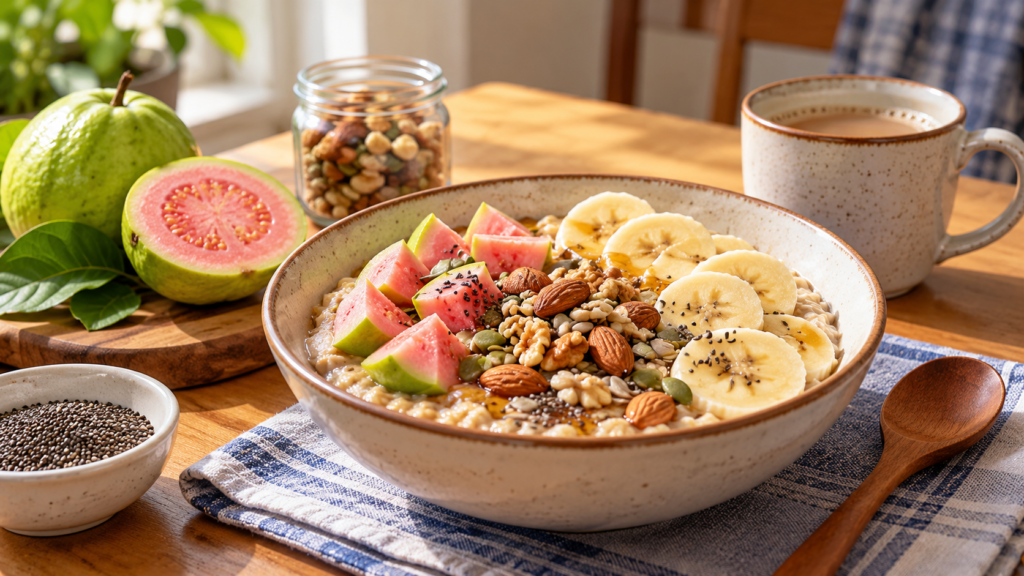
Oats are one option. They can be prepared with milk or water and served with fruit, nuts or seeds. If you prefer Indian breakfast dishes, vegetable poha, besan chilla and vegetable dalia can also be useful choices, depending on how they are prepared. Whole fruits are another simple addition. An apple, pear, orange or guava can provide fibre along with other nutrients.
You do not need to eat the same breakfast every day. The idea is to include a variety of foods rather than relying on one item for all your nutritional needs.
Choose Whole Grains More Often
Refined grains are common in white bread, maida-based snacks and many bakery products. Whole grains retain more of the grain’s original components, including fibre. For everyday meals, whole-wheat roti can be a practical choice. Brown rice, oats, barley and other whole grains can also add variety to your diet.
You do not have to stop eating white rice or your favourite foods completely. Instead, consider replacing one refined-grain option with a whole-grain alternative when it suits your meal. For example, you could have whole-wheat bread instead of white bread on some days or try dalia for breakfast. Small changes are often easier to maintain than a strict food plan.
Make Dal, Chana and Beans Regular Meal Options
Pulses and beans are familiar ingredients in many Indian kitchens. Moong dal, masoor dal, rajma, chana and lobia provide fibre as well as other nutrients. Adding these foods to lunch or dinner can help make a meal more varied. You can have dal with roti, prepare chana as a curry or add beans to a vegetable dish.
Roasted chana can also be a convenient snack for people who want an alternative to frequently eating biscuits or packaged namkeen. If you are not used to eating many high-fibre foods, increase your intake gradually. A sudden large increase may cause gas or bloating in some people. Drinking enough water throughout the day can also help fibre do its job.
Do Not Forget Vegetables at Lunch and Dinner
Vegetables can add colour, flavour and fibre to everyday meals. Yet when people are busy, meals sometimes become limited to roti or rice with very little variety. Try adding one vegetable dish to lunch or dinner whenever possible. Carrots, peas, beans, spinach, cabbage, cauliflower and other vegetables can be used in simple home-cooked recipes.
Salads are another option if you enjoy them. Cucumber, carrots, tomatoes and other suitable vegetables can be served alongside your usual meal. Fresh, frozen and cooked vegetables can all fit into a balanced eating pattern. The best choice is often the one you enjoy and can prepare regularly.
Keep Fruit as a Simple Everyday Snack
Fruit can be an easy way to add fibre without preparing a separate dish. Guava, pears, apples, oranges and berries are examples of fruits that contain fibre.
Whenever practical, eat whole fruit instead of choosing juice as your main fruit option. Juicing often removes much of the fibre found in the whole fruit, especially when the pulp is discarded. You can carry a washed fruit to work or college, keep seasonal fruit at home or add chopped fruit to breakfast. There is no need to search for expensive imported varieties. Locally available seasonal fruits can provide useful nutrients and make everyday eating more varied.
Increase Fibre Slowly and Keep Your Meals Balanced
Adding fibre is not about following a complicated diet or eating only salads. A regular Indian meal can include fibre through whole grains, pulses, vegetables, fruit, nuts and seeds.
Start with one change, such as adding fruit to breakfast or including dal more often. Once that becomes part of your routine, try another change. Remember that individual nutritional needs can differ. People with certain digestive conditions or specific dietary requirements may need personalised advice from a qualified healthcare professional. The simplest approach is to build variety into your meals and make changes that fit your budget, food preferences and daily schedule. Over time, these small choices can help you develop a more balanced eating routine.