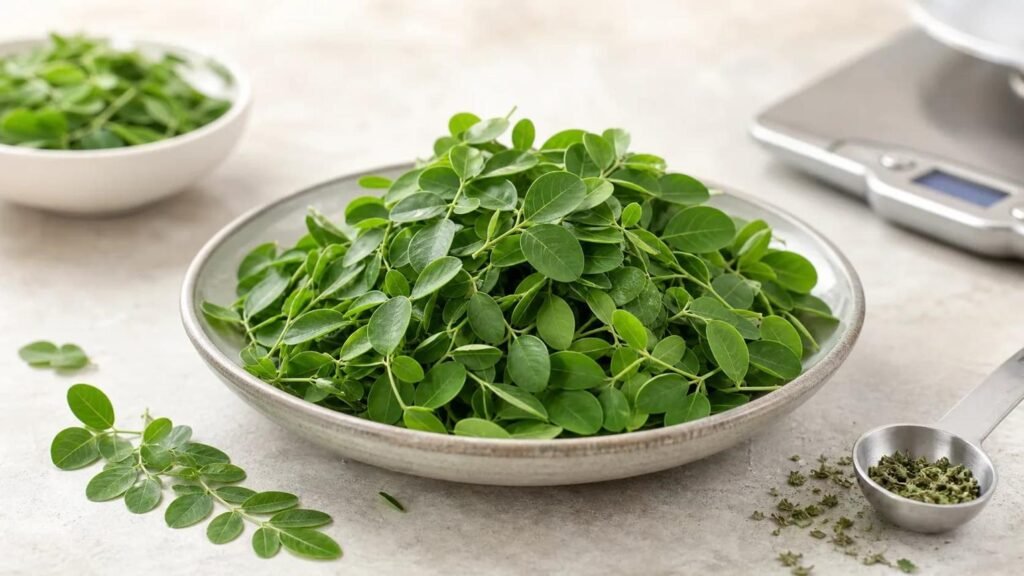
Drumstick leaves, also known as moringa leaves, are commonly used in Indian cooking. They are popular in several parts of the country and can be prepared in different ways, including simple stir-fries, dal, curries and traditional vegetable dishes.
While drumsticks are often added to sambhar and other recipes, their leaves are also worth including in everyday meals. They contain several nutrients, including vitamins, minerals, fibre and natural plant compounds.
Many people overlook these leaves when buying vegetables, but they can add both flavour and nutritional variety to a regular diet. Here are seven benefits of eating drumstick leaves and some easy ways to include them in your meals.
1. Drumstick Leaves Contain Important Vitamins
One of the main benefits of drumstick leaves is their vitamin content. They provide nutrients such as vitamin A, vitamin C and certain B vitamins.
Vitamin A supports normal vision and the proper functioning of the immune system. Vitamin C helps the body make collagen and also supports normal immune function.
Including different leafy vegetables in your meals is a simple way to get a wider range of vitamins. Drumstick leaves can be one of several options in a balanced diet.
2. They Provide Plant-Based Iron
Drumstick leaves contain iron, a mineral that helps the body make haemoglobin. Haemoglobin carries oxygen through the blood.
Iron is an important nutrient, particularly for people whose diets do not include many iron-rich foods. However, the amount the body absorbs from plant foods can vary.
Eating vitamin C-rich foods along with plant sources of iron may help the body absorb iron more effectively. For example, drumstick leaves can be served with a meal that includes tomatoes or lemon.
3. They Are a Source of Dietary Fibre
Fibre is an important part of a healthy eating routine, and drumstick leaves provide some dietary fibre.
Eating enough fibre from vegetables, fruits, pulses and whole grains supports normal digestion and helps maintain regular bowel movements.
Adding leafy vegetables to lunch or dinner can also make meals more varied and satisfying.
Drumstick leaves can be mixed with dal or cooked with other vegetables to increase the variety of plant foods on your plate.
4. They Contain Calcium for Everyday Nutrition
Calcium is an important mineral that supports normal bone and teeth health. Drumstick leaves contain calcium and can contribute to the overall variety of calcium-containing foods in a diet.
The body needs calcium throughout life, so including different sources in everyday meals is useful.
Other food sources include milk, curd, certain seeds and some green vegetables. A varied diet is generally a better approach than depending on a single food for one nutrient.
5. They Provide Natural Plant Compounds
Like many leafy vegetables, drumstick leaves contain natural plant compounds, including antioxidants.
Antioxidants help protect the body’s cells from damage caused by unstable molecules known as free radicals.
Different vegetables contain different plant compounds. This is one reason nutrition experts often encourage people to eat a variety of colourful fruits and vegetables instead of relying on just a few familiar options.
Drumstick leaves can add another nutritious choice to that variety.
6. They Add More Variety to Vegetarian Meals
People following a vegetarian diet often look for different plant foods to make their meals more varied. Drumstick leaves can be a useful addition because they provide several nutrients in one familiar ingredient.
They can be cooked with lentils, added to vegetable curries or mixed with onions and mild spices.
Combining them with pulses, whole grains, nuts and other vegetables can help create balanced everyday meals.
There is no need to prepare complicated recipes. A simple homemade dish can be enough to include these leaves in your regular food routine.
7. They Are Easy to Use in Indian Cooking
Another reason to include drumstick leaves is that they can be prepared in several traditional ways.
In some Indian homes, they are cooked with dal, coconut, garlic or onions. They can also be added to parathas, vegetable dishes and soups.
Before cooking, remove the leaves from the thicker stems and wash them properly under clean running water. Drain the water and use the leaves in your chosen recipe.
Cooking them with a moderate amount of oil and salt is a practical way to prepare them for everyday meals.
How to Add Drumstick Leaves to Your Diet
If you are not used to eating drumstick leaves, start with a small amount in a familiar recipe. Adding them to dal or a mixed vegetable dish can make their flavour easier to enjoy.
You can also try a simple stir-fry with garlic, onions and a few everyday spices. Fresh leaves should be cleaned properly before cooking, and any damaged or spoiled leaves should be discarded.
People with specific dietary restrictions or health conditions should consider their individual nutritional needs when making major changes to their diet.
Drumstick leaves are an affordable and versatile leafy vegetable that can bring more nutrients and variety to everyday meals. Including them alongside other vegetables, fruits, pulses and whole grains is a simple way to build a balanced eating routine.