
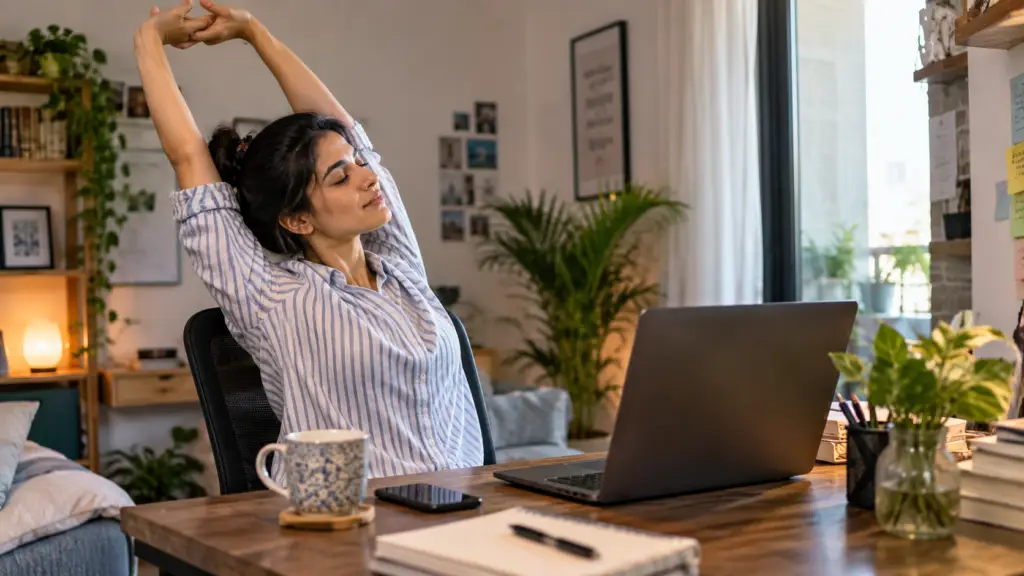
If you spend most of your day sitting at a desk, scrolling on your phone or working on a laptop, you may not notice the effect immediately. But after a few weeks or months, the signs can become harder to ignore — a stiff neck in the morning, tight shoulders, an aching back or simply feeling like your body needs to move.
This is becoming a bigger part of the health conversation in 2026. With work, entertainment and even socialising increasingly happening through screens, everyday movement can easily disappear from the routine.
The good news is that you don’t need an extreme fitness plan to start moving more. A few simple changes throughout the day can make your routine much more active.
1. Stop Treating Eight Hours of Sitting Like One Long Block
One of the easiest changes is also one of the most practical: break up long periods of sitting.
Instead of staying in the same position for hours, get up regularly. Walk to another room, refill your water bottle, stand while taking a phone call or simply spend a couple of minutes moving around.
The goal isn’t to turn every break into a workout. It’s to stop your entire day from becoming one continuous sitting session.
Even small amounts of movement are better than doing nothing.
2. Your Phone Doesn’t Need Your Neck Bent Down
The way we use phones can quietly affect how much strain our neck and upper back experience.
Holding a phone low for long periods encourages you to look downward, especially when you’re sitting on a sofa or lying in bed.
Try bringing the screen closer to eye level when possible. Change positions regularly and avoid staying frozen in the same posture while scrolling.
It sounds minor, but your phone habits can add up when you’re using the device repeatedly throughout the day.
3. Add a Short Walk After Dinner
You don’t always need a complicated evening workout.
A 10–15 minute walk after dinner can be an easy way to add movement to your day. It can also help prevent the evening from becoming another long stretch of sitting in front of a screen.
If you have time for a longer walk, even better. But don’t underestimate a short one simply because it doesn’t feel like exercise.
Making movement part of an existing routine is often easier to maintain than creating a completely new fitness schedule.
4. Make Your Sleep Time More Consistent
Health isn’t only about what you do during the day.
Your sleep schedule matters too.
Recent research involving large real-world datasets has found that greater consistency in sleep timing is associated with better activity patterns and more favourable heart-rate measures. That doesn’t prove that a perfectly regular bedtime directly causes better health, but it adds to the growing evidence that sleep regularity deserves attention alongside sleep duration.
Instead of dramatically changing your bedtime every night, try keeping your sleeping and waking times reasonably consistent.
Your body likes routines more than you might think.
5. Don’t Wait Until You Feel Unfit to Start Moving
One of the biggest mistakes people make is thinking movement only matters when they’re trying to lose weight or become fitter.
It doesn’t.
Walking, cycling, household work, stretching, playing a sport and simply spending less time sitting can all contribute to physical activity.
The World Health Organization recommends that adults get 150–300 minutes of moderate-intensity physical activity each week, along with muscle-strengthening activities on at least two days. But if you’re currently doing very little, you don’t have to suddenly reach that target tomorrow. Starting with smaller amounts and gradually building up is perfectly reasonable.
The Bottom Line
You don’t need to completely redesign your lifestyle to become more active.
Start by breaking up long sitting periods, changing how you use your phone, taking a short evening walk and keeping your sleep schedule more consistent.
These habits may look almost too simple to matter. But that’s exactly what makes them useful — they’re realistic enough to fit into an ordinary day.
And in 2026, everyday health is increasingly moving away from extreme routines and towards habits people can actually stick with.