

Sharad Navratri begins on October 11, and many people will be preparing for nine days of prayer, fasting and festive gatherings. For some, the routine also includes office work, long commutes, household responsibilities and late-night Garba or Dandiya plans.
That combination can make fasting harder than expected. People may feel tired, hungry or low on energy when they go too long without eating, drink too little water or depend mainly on fried fasting snacks. The food choices allowed during a vrat vary between families, regions and personal traditions, so there is no single meal plan that works for everyone.
A little planning before the first fast can help make the days easier to manage. Here are five common habits worth checking before Navratri begins.
1. Relying on fried vrat snacks for most meals
Sabudana vada, potato puri and other fried snacks are popular during Navratri. They can be part of a festive meal, but relying on them throughout the day may leave little room for variety.
Depending on the ingredients and portion size, a meal built mainly around fried starches may not provide much protein or fibre. That can make it harder to build satisfying meals, especially when the day is busy.
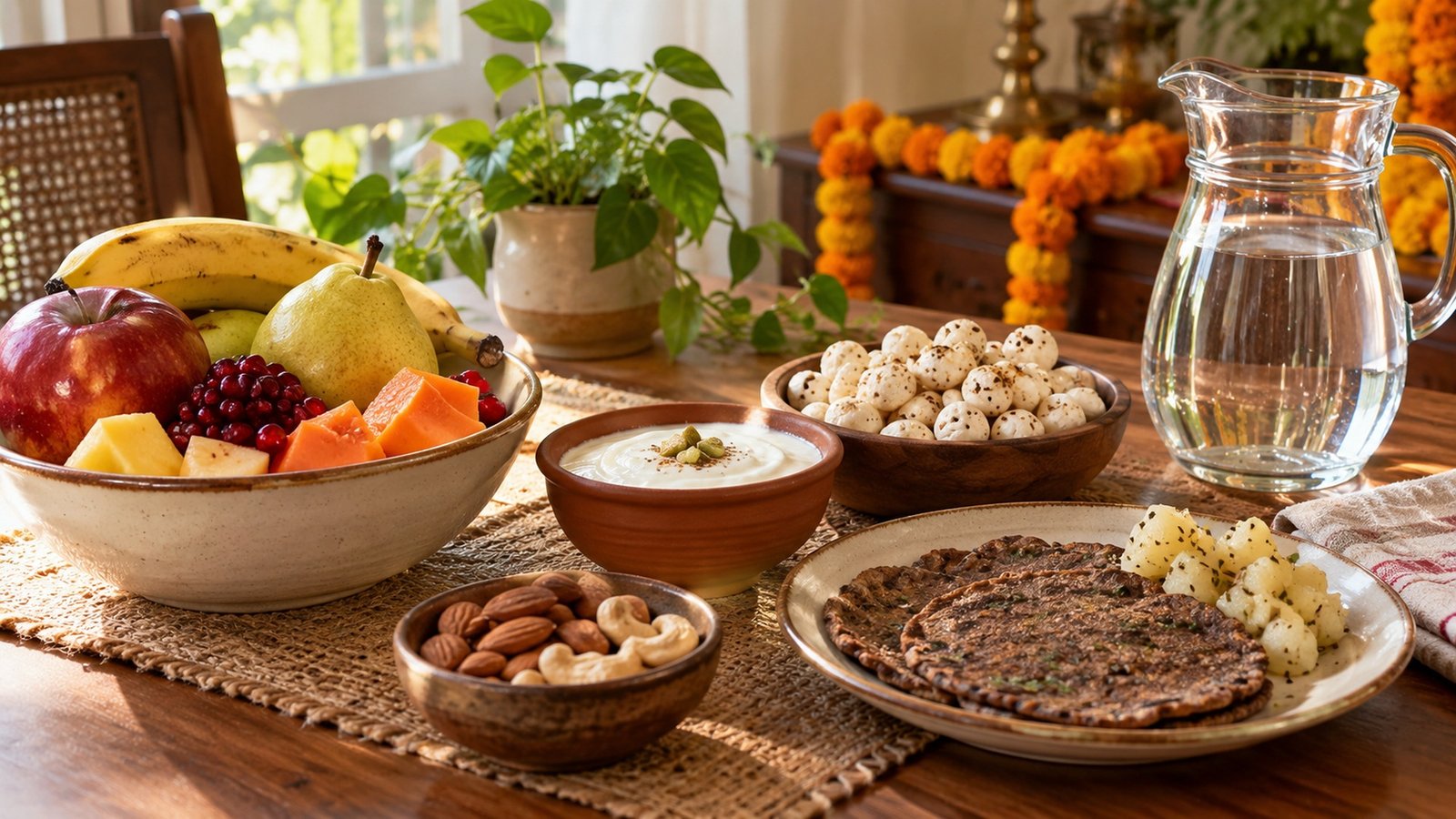
Try mixing up the foods your family permits during fasting. Depending on your household’s vrat rules, options may include curd, milk, paneer, nuts, fruit, makhana, permitted vegetables or dishes made with kuttu and rajgira. You do not need to remove every traditional favourite. The aim is to avoid making every meal the same kind of fried snack.
2. Forgetting to drink water during a busy day
When routines change, drinking water can be easy to forget. This is particularly relevant for people travelling to work, spending hours outside or attending evening celebrations.
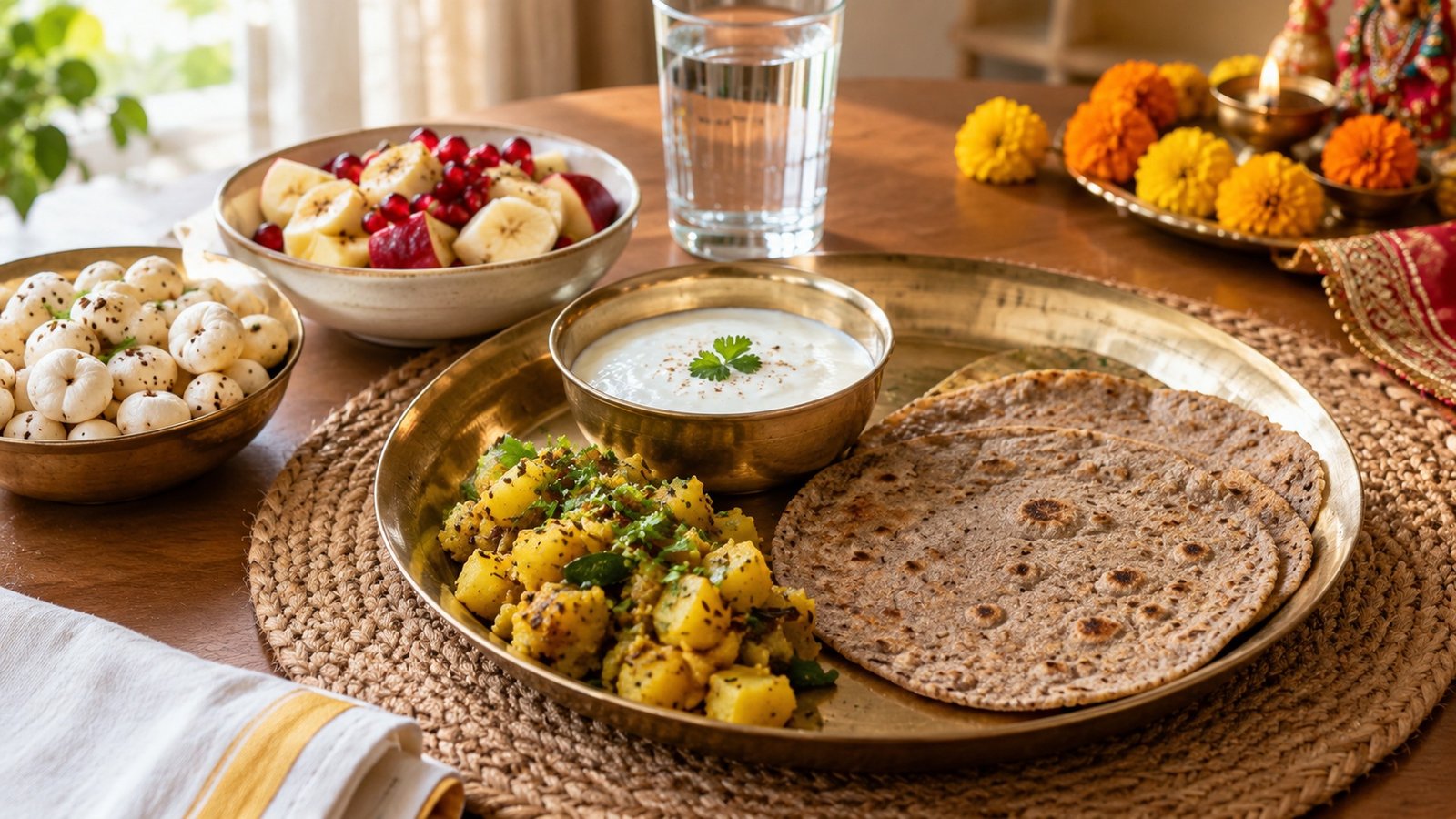
Keep water accessible and sip regularly throughout the day if your fasting practice permits it. Plain water is a useful everyday choice. Coconut water or other drinks may suit some people, but they do not need to replace water entirely.
Fluid needs vary with weather, activity and individual health. Anyone who has been advised to restrict fluids should follow their own medical guidance rather than a general fasting tip.
3. Skipping food for too long, then eating a very large meal
Some people eat very little for much of the day and then have a large meal when they finally sit down. After a long gap, eating quickly or choosing a very heavy meal may leave them feeling uncomfortable.
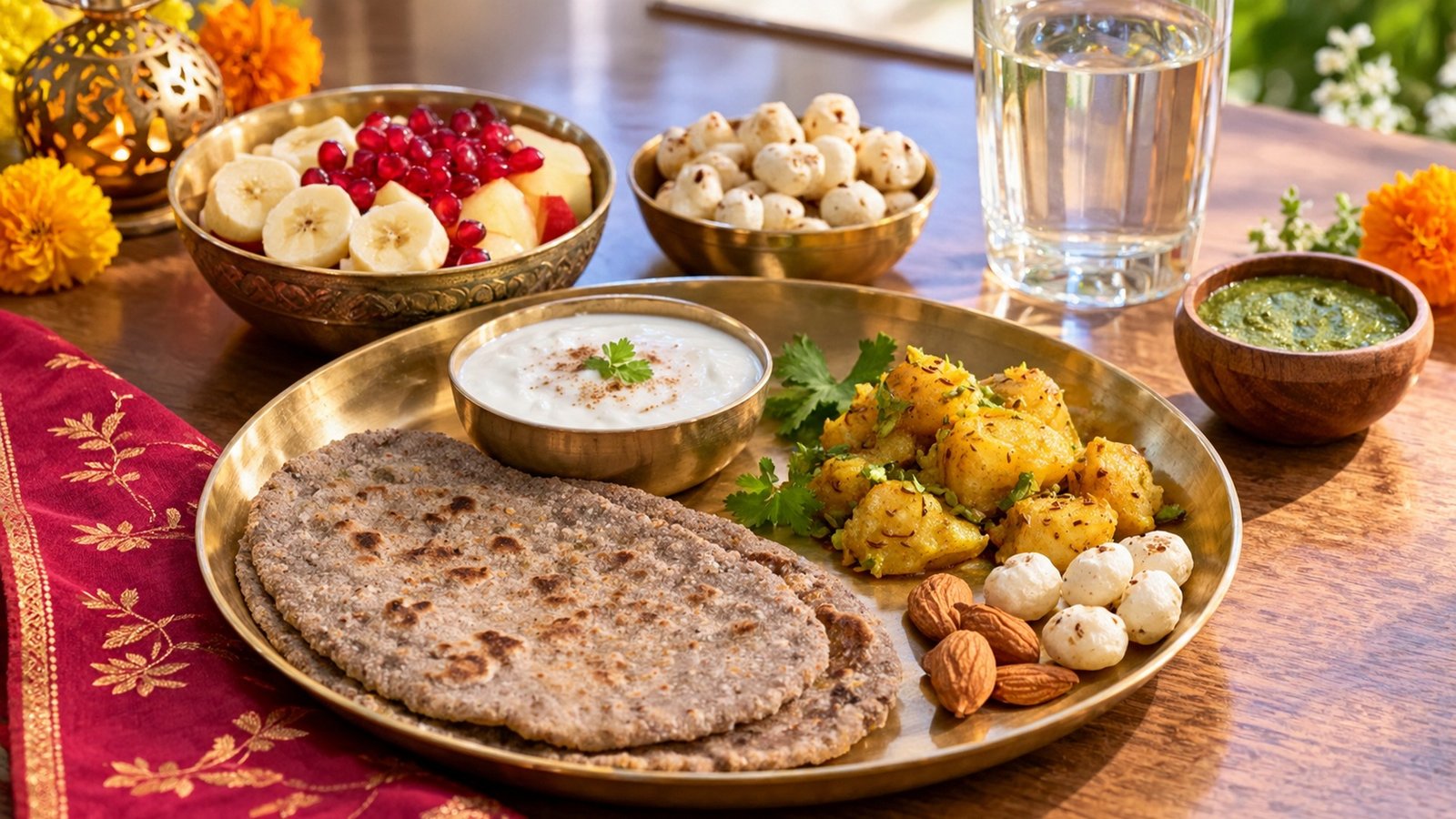
If your fasting rules allow it, plan simple meals or snacks ahead of time instead of waiting until you are extremely hungry. Eat at a comfortable pace and notice how you feel. Fruit, curd, nuts or a suitable home-cooked vrat meal may be options, depending on your personal practice.
There is no need to force yourself to follow someone else’s fasting schedule. Navratri routines differ, and the right approach depends on what you observe and what your body can manage.
4. Treating tea or coffee as a substitute for water and food
Tea and coffee may be part of a person’s morning routine, but they are not a replacement for meals. Having several cups while eating very little can also make some people feel jittery or affect their sleep, particularly if they are sensitive to caffeine.
If you drink tea or coffee during your permitted eating hours, pay attention to the amount and timing. Pair your usual drink with a suitable meal or snack rather than using it to push through hunger.
5. Continuing the same routine despite feeling unwell
Fasting is observed differently across households, and people should not feel they must ignore physical discomfort to complete it. Persistent dizziness, unusual weakness, fainting or confusion should not be brushed aside as a normal part of the festival.
People with diabetes, kidney or heart conditions, those who are pregnant or breastfeeding, and anyone taking regular medicines should seek individual medical advice before changing their eating or drinking routine. Fasting may require extra planning or may not be suitable for some people.
Navratri can include devotion, family meals and late-night celebrations without turning every day into a test of endurance. Planning permitted foods, keeping water nearby and allowing enough rest are sensible starting points. If a routine makes you repeatedly unwell, it is worth reviewing it rather than simply pushing through.