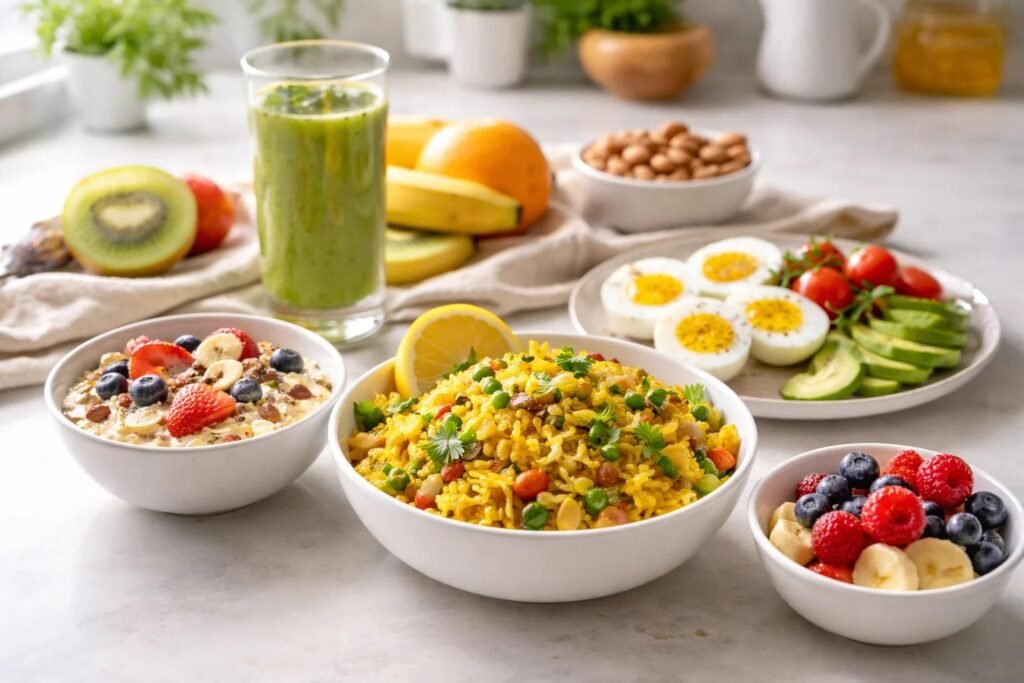
Eating a balanced diet does not mean giving up your favourite foods or following a strict food routine. It is about including different types of food in your daily meals and making sensible choices most of the time.
Busy schedules, frequent ordering and irregular meal timings can sometimes make healthy eating difficult. Many people also repeat the same dishes every day because they are easy to prepare.
However, small changes in everyday food habits can help bring more variety to your meals. You do not need expensive ingredients or complicated recipes to get started.
Here are seven simple ways to make your daily diet more balanced and enjoyable.
1. Include Different Colours on Your Plate
One easy way to add variety to your meals is to include vegetables and fruits of different colours. Green vegetables, orange carrots, red tomatoes, purple brinjal and yellow pumpkin can all bring variety to everyday cooking.
Different fruits and vegetables provide different nutrients, so eating a range of them can help make meals more varied.
Try adding one extra vegetable to your lunch or dinner. You can also include seasonal fruits as part of your daily routine.
Instead of buying the same items every week, choose a few different options when shopping for groceries.
2. Do Not Skip Breakfast Regularly
Breakfast is an important meal for many people, but busy mornings can make it easy to skip. Some people leave home with only tea or coffee and wait until lunchtime to eat properly.
Try to keep a few simple breakfast options ready. Vegetable poha, idli, oats, dal chilla, eggs or whole-grain toast can be practical choices depending on your food preferences.
You do not need to prepare an elaborate meal every morning. Even a simple breakfast with a mix of food groups can help you begin the day with a more organised eating routine.
3. Add Protein-Rich Foods to Your Meals
Protein is an important part of a balanced diet. It is found in several everyday foods, so you do not need to depend on expensive products to include it.
Vegetarians can choose dal, chickpeas, rajma, paneer, curd, soybeans and other pulses. People who eat non-vegetarian food may include eggs, fish or chicken.
Try to include a protein source in your main meals rather than eating only rice, roti or other carbohydrate-rich foods.
Changing your choices through the week can also make your meals more interesting.
4. Choose Whole Grains More Often
Rice and wheat are common parts of Indian meals. However, you can add more variety by including different whole grains in your weekly menu.
Options such as oats, whole-wheat atta, ragi, jowar, bajra and barley can be used in different dishes.
You can prepare millet rotis, vegetable dalia, oats upma or ragi dosa at home. Start with small changes instead of replacing every familiar food at once.
Whole grains can provide dietary fibre and help make everyday meals more varied.
5. Keep Healthy Snacks Within Reach
When hunger strikes between meals, it is easy to choose packaged snacks simply because they are convenient. Keeping a few simple options at home or at work can make better choices easier.
Fresh fruit, roasted chana, a handful of nuts, plain curd and homemade snacks are some options to consider.
You can prepare small snack portions in advance and carry them when leaving home. This may help reduce the habit of buying something quickly whenever you feel hungry.
Remember that portion size also matters. Even nutritious foods are best enjoyed in suitable amounts.
6. Drink Water Regularly During the Day
Water is an important part of everyday health, but people sometimes forget to drink enough when they are busy.
Keep a water bottle near your work desk or carry one while travelling. You can also make it a habit to drink water after waking up, during breaks and with meals.
Plain water should remain your main choice for hydration. If you enjoy other drinks, be mindful of added sugar in packaged juices, soft drinks and sweetened beverages.
Your water needs can vary depending on weather, activity and individual circumstances.
7. Plan Your Meals Before the Week Begins
Meal planning can make balanced eating easier, especially when you have a busy routine. Without a basic plan, you may end up repeating the same meals or ordering food because nothing is prepared.
Spend a little time deciding what you will cook during the coming week. Make a grocery list that includes vegetables, fruits, grains, pulses and other ingredients you regularly use.
You can also wash and store suitable vegetables in advance. Keep simple ingredients available for quick meals on busy days.
Planning does not mean following a fixed menu every day. It simply helps you make more thoughtful food choices.
Small Food Changes Can Improve Your Routine
A balanced diet is not about being perfect or avoiding every food you enjoy. It is about building a routine that includes variety, suitable portions and regular meals.
Start with one simple change, such as adding another vegetable to lunch or keeping fruit ready for a snack. Gradually, these small steps can become part of your everyday eating habits.
Choose foods that suit your preferences, budget and routine. A practical eating pattern is easier to follow than a complicated diet plan.