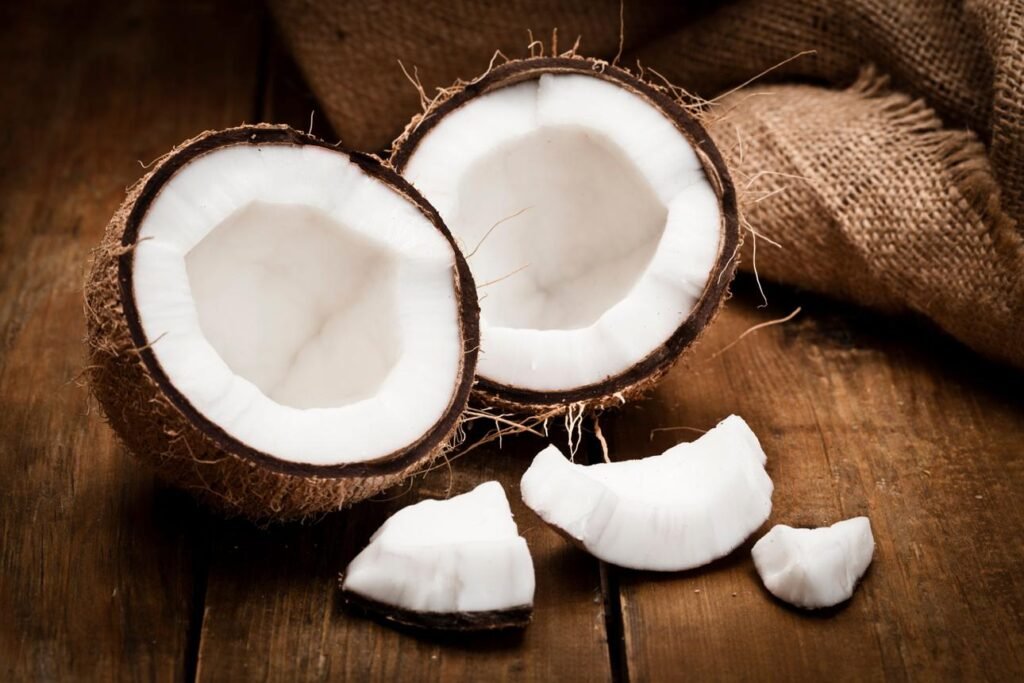
Coconut is one of the most commonly used ingredients in Indian kitchens. From coconut chutney and vegetable curries to sweets and traditional snacks, it adds a rich taste and natural texture to many dishes.
It is enjoyed in different forms, including fresh coconut, dried coconut, coconut milk and coconut water. Each form has a different nutritional profile, so the way you consume it can make a difference.
Fresh coconut contains dietary fibre, fats and several minerals. It can be included in a balanced diet when eaten in suitable portions. Here are seven simple benefits of eating coconut and some easy ways to use it in everyday meals.
1. Coconut Provides Dietary Fibre
One of the benefits of eating fresh coconut is its dietary fibre content. Fibre is an important part of everyday meals because it supports normal digestion and helps maintain regular bowel movements.
Adding fibre-rich foods to your diet can also make meals more satisfying. Fresh coconut can be used as a topping for breakfast dishes, mixed into homemade chutneys or added to vegetable preparations.
Remember that coconut is only one source of fibre. Fruits, vegetables, pulses, whole grains and other nuts and seeds should also be part of a varied diet.
2. It Contains Minerals
Fresh coconut provides minerals such as manganese, copper, selenium and potassium. These nutrients have different roles in the normal functioning of the body.
For example, manganese is involved in normal energy metabolism and bone formation. Copper supports several body processes, while potassium plays a role in normal muscle and nerve function.
The amount of each nutrient depends on the type of coconut and the portion you eat. Including different plant foods in your meals is a simple way to get a wider range of nutrients.
3. It Adds Healthy Fat to Your Diet
Coconut contains fat, including saturated fat. Fat is an essential part of the diet because the body uses it for energy and to absorb certain vitamins.
However, coconut is different from foods rich in unsaturated fats, such as nuts, seeds and many vegetable oils. Its saturated fat content means that portion size is worth considering.
You can enjoy a small amount of fresh coconut in chutneys, salads or cooked dishes. It is better to use it as one ingredient in a varied diet rather than depending on it as your main source of dietary fat.
4. It Makes Everyday Meals More Flavourful
Coconut is popular in Indian cooking because it adds flavour and texture without requiring complicated preparation.
Grated coconut can be added to poha, upma, vegetable stir-fries and homemade salads. In South Indian meals, it is often used to prepare coconut chutney, which goes well with idli, dosa and vada.
Fresh coconut can also be added to traditional curries and rice dishes. Its mild natural sweetness balances the flavours of spices and herbs.
This makes it an easy ingredient for people who want to bring variety to regular home-cooked food.
5. It Can Be Used in Different Forms
Another useful feature of coconut is that it is available in several forms. Fresh coconut is commonly used in everyday cooking, while dried coconut is often added to sweets and snacks.
Coconut milk is used in some curries and desserts. Coconut flour is another option for selected recipes, although its texture and cooking properties are different from regular wheat flour.
These products are not nutritionally identical. For example, coconut milk may contain different amounts of fat depending on whether it is thick, diluted or commercially prepared.
Checking food labels can help you understand what you are buying, especially when choosing packaged coconut products.
6. It Can Be Part of a Filling Snack
Fresh coconut can be enjoyed as a small snack between meals. Its fibre and fat content give it a different texture and eating experience compared with many light fruit snacks.
You can cut fresh coconut into small pieces and enjoy it on its own. It can also be combined with fruit or a small portion of nuts for a more varied snack.
Since coconut is energy-dense, a modest serving is usually a sensible choice. There is no need to eat large quantities to enjoy its taste.
7. It Fits Into Many Traditional Indian Recipes
Coconut has a long history in Indian food and is used in different regional cooking styles.
In Kerala, it is an important ingredient in several vegetable dishes and curries. In Karnataka and Tamil Nadu, fresh coconut is commonly used in chutneys and breakfast preparations.
It is also used in sweets such as coconut ladoo and barfi. At home, you can add grated coconut to simple dishes instead of preparing a separate recipe.
Using familiar ingredients in different ways can make everyday meals more enjoyable while keeping cooking practical.
How to Eat Coconut in a Balanced Way
Fresh coconut can be eaten grated, sliced or mixed into cooked dishes. Choose a fresh coconut without signs of spoilage and store cut pieces in the refrigerator in a covered container.
If you use dried coconut or packaged coconut products, check the ingredient list and avoid options with unnecessary added sugar or excess salt.
People who need to limit saturated fat for personal dietary reasons may want to discuss suitable portions with a qualified health professional.
Final Thoughts
Coconut is a versatile ingredient that provides fibre, fats and useful minerals. Its flavour makes it suitable for many Indian recipes, from chutneys and curries to snacks and sweets.
Enjoy it in moderate portions and combine it with a variety of fruits, vegetables, pulses and whole grains. This is a simple way to make coconut part of a balanced everyday diet.