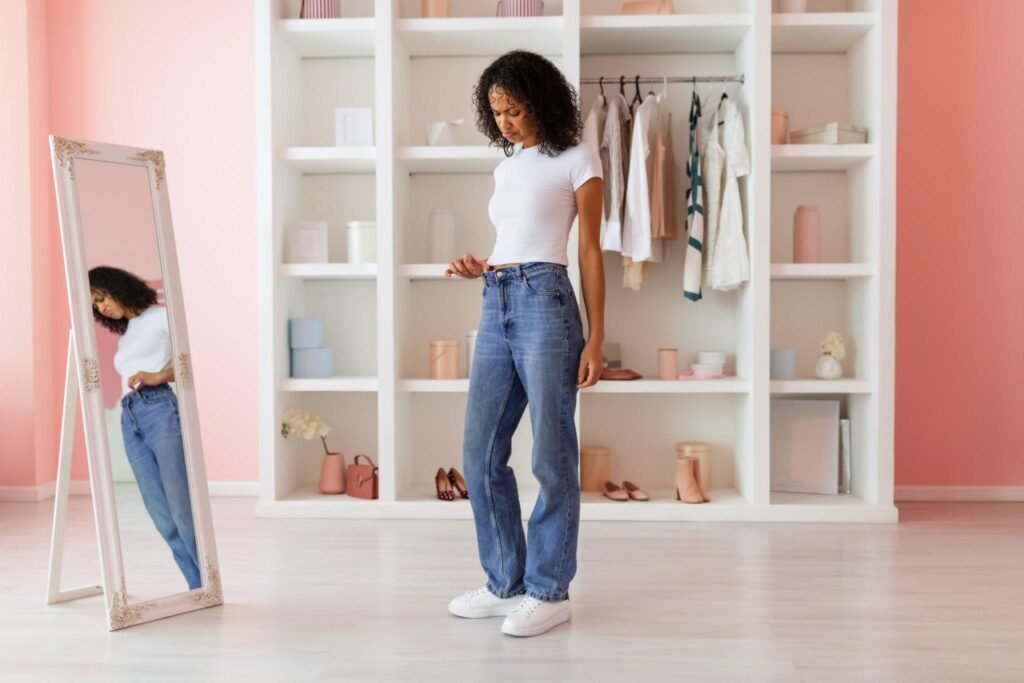
Fitted clothes have become a popular part of everyday fashion. From skinny jeans and bodycon dresses to tight tops and leggings, many people enjoy wearing outfits that give a neat and stylish look.
However, choosing clothes only because they look fashionable is not always a good idea. The right outfit should also allow you to sit, walk, bend and move comfortably throughout the day.
Wearing clothes that are too tight can cause discomfort, skin irritation and unwanted pressure in certain areas. The problem is not wearing fitted outfits occasionally, but choosing clothes that do not suit your body or daily activities.
A few simple clothing habits can help you make better fashion choices without giving up your personal style.
Here are seven common mistakes to avoid when choosing tight clothes.
1. Choosing Jeans That Are Too Tight
Skinny jeans remain a popular choice because they can be paired with shirts, T-shirts, kurtis and different types of footwear.
However, jeans that feel extremely tight around the waist, hips or thighs may become uncomfortable after a few hours. They can also make simple activities such as sitting, climbing stairs and walking difficult.
When buying jeans, check whether you can sit and move freely. The waistband should not dig into your skin, and the fabric should allow comfortable movement.
A well-fitted pair of jeans can look stylish without feeling restrictive.
2. Wearing Tight Clothes in Hot Weather
During summer, the choice of fabric becomes especially important. Tight clothes made from thick or non-breathable materials may trap heat and sweat.
This can make you feel uncomfortable, particularly when spending long hours outdoors.
Choose lightweight fabrics such as cotton or other breathable materials whenever possible. Relaxed-fit shirts, loose trousers and comfortable dresses can be useful choices during hot days.
You can still create fashionable outfits without wearing heavy or closely fitted clothes.
3. Ignoring the Right Size
Many people choose a smaller clothing size because they believe it creates a more fitted appearance. However, wearing a size that does not suit your measurements can affect both comfort and the overall look.
Clothes that pull around the buttons, stretch excessively or create uncomfortable pressure may not be the right fit.
Always check the size chart when shopping online. Different brands can have different measurements, so avoid choosing a size based only on the label.
Your comfort should matter more than the number printed inside the garment.
4. Wearing Tight Innerwear for Long Hours
Innerwear is an important part of everyday clothing, but the wrong fit can make you uncomfortable throughout the day.
Very tight underwear, bras or shapewear may create pressure, leave marks on the skin or make movement difficult.
Choose innerwear that fits properly and is made from comfortable material. Check the waistband, straps and seams to make sure they do not dig into your skin.
Shapewear should also be selected carefully. It should not make breathing, sitting or normal movement difficult.
5. Choosing Fashion Over Comfortable Footwear
Tight clothing is sometimes paired with footwear that also feels restrictive. For example, narrow shoes with fitted jeans or a tight dress may make walking uncomfortable.
Footwear should provide enough room for your toes and support your normal movement.
If you are going to spend several hours outside, choose shoes that you can comfortably walk in. Save uncomfortable fashion footwear for occasions when you do not need to walk long distances.
A stylish outfit looks better when you can move confidently.
6. Wearing Tight Clothes While Exercising
Some people prefer fitted leggings, sports tops and gym outfits during workouts. These clothes can be useful when they allow easy movement and are made for physical activity.
However, clothing that is too tight may restrict movement or cause rubbing during exercise.
Before buying workout clothes, try basic movements such as squatting, stretching and bending. The fabric should stay comfortable without pulling too much around the waist, knees or shoulders.
Choose breathable materials that suit the activity and weather conditions.
7. Ignoring Skin Discomfort
Clothing that repeatedly rubs against the skin can cause irritation, especially around the waist, thighs, underarms and other areas where fabric stays close to the body.
Sweat and friction can make this discomfort more noticeable during long days or warm weather.
If an outfit causes itching, redness or painful pressure, change into something more comfortable. Wash clothes regularly and choose soft fabrics that feel suitable for your skin.
Do not continue wearing an uncomfortable outfit simply because it looks good.
How to Choose Clothes That Look Stylish and Feel Comfortable
You do not need to avoid fitted fashion completely. The important thing is to choose clothes that match your body measurements and daily routine.
Try outfits before purchasing them whenever possible. Check the fit while sitting, walking and moving your arms.
For online shopping, read customer reviews and check fabric details along with the size chart. A little attention before buying can help you avoid clothes that remain unused in your wardrobe.
You can also balance fitted and relaxed pieces. For example, pair fitted jeans with a loose shirt or wear a relaxed top with comfortable trousers.
Final Thoughts
Fashion should make you feel confident, not uncomfortable. Wearing tight clothes occasionally is a personal choice, but choosing outfits that restrict movement or cause skin discomfort is worth avoiding.
Pay attention to fabric, size, innerwear and footwear before deciding what to wear. A comfortable outfit can look just as stylish as a very fitted one.