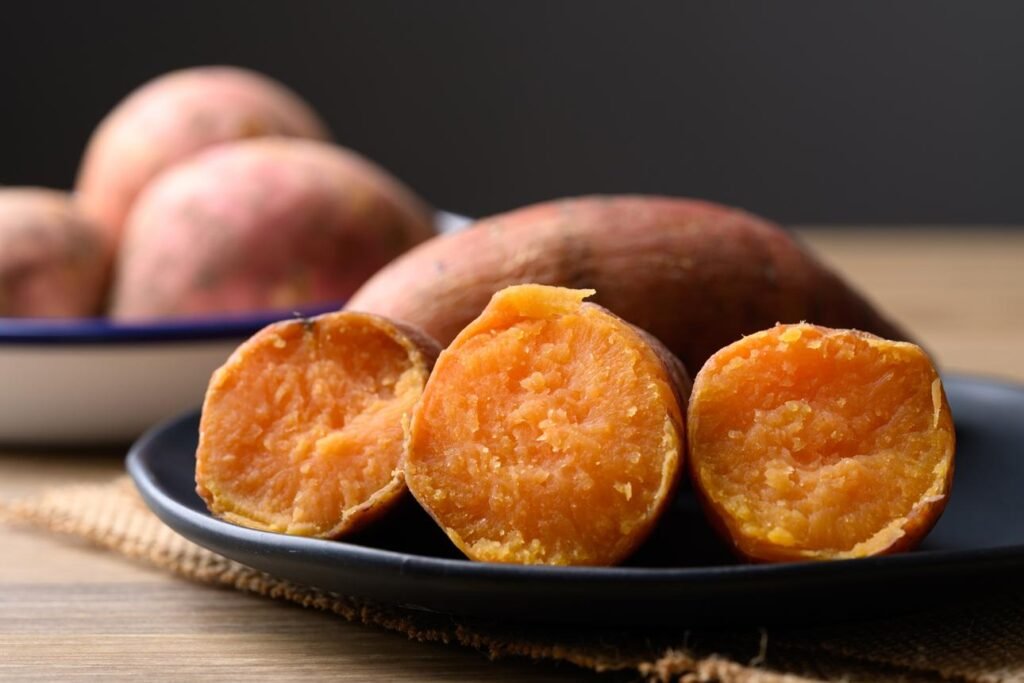
Sweet potatoes are a popular food in many Indian homes, especially during the cooler months. They are naturally sweet, filling and can be prepared in several simple ways. Some people enjoy them boiled with a little salt, while others prefer roasted or cooked sweet potatoes as part of a meal.
Apart from their taste, sweet potatoes contain useful nutrients such as dietary fibre, vitamin A in the form of beta-carotene, vitamin C and potassium. They can be a good addition to a balanced diet when prepared with simple ingredients.
Unlike many packaged snacks, sweet potatoes can be cooked at home without complicated preparation. They are also easy to combine with other everyday foods.
Here are seven reasons why you may want to include sweet potatoes in your regular meals.
1. Sweet Potatoes Provide Dietary Fibre
Dietary fibre is an important part of everyday eating. It supports normal digestion and helps maintain regular bowel movements.
Sweet potatoes contain fibre, particularly when their skin is eaten after proper washing and cooking. Fibre-rich foods can also make meals feel more satisfying.
You can enjoy a boiled sweet potato as a snack or add small pieces to a homemade vegetable bowl. Including different fibre sources such as fruits, vegetables, pulses and whole grains is a useful way to maintain variety in your diet.
2. They Contain Beta-Carotene
The orange colour of many sweet potatoes comes from beta-carotene, a natural plant pigment. The body can convert beta-carotene into vitamin A, which is needed for normal vision, immune function and healthy skin.
The amount of beta-carotene can vary depending on the variety of sweet potato. Orange-fleshed varieties are generally known for their higher beta-carotene content.
Adding different coloured vegetables to your meals is a simple way to enjoy a wider range of nutrients. Sweet potatoes can be one of those choices.
3. They Offer Natural Energy
Sweet potatoes contain carbohydrates, which are one of the body’s main sources of energy. This makes them a useful food to include in regular meals.
A boiled or roasted sweet potato can be enjoyed during breakfast, lunch or as an afternoon snack. It can also be paired with curd, dal or other protein-rich foods to make a more balanced meal.
Their natural sweetness makes them enjoyable without needing extra sugar. You can prepare them in simple ways and adjust the portion according to your appetite.
4. They Provide Potassium
Potassium is an important mineral that supports normal muscle function, nerve activity and fluid balance in the body.
Sweet potatoes provide potassium, making them one of several plant foods that can contribute to daily mineral intake. Other sources include bananas, beans, leafy vegetables and potatoes.
Eating a variety of these foods is more useful than depending on just one ingredient. You can include sweet potatoes alongside other vegetables in a balanced meal.
5. They Contain Vitamin C
Sweet potatoes also provide vitamin C, a nutrient that supports normal immune function and helps the body produce collagen.
Vitamin C also helps the body absorb iron from plant-based foods. Including different sources of this vitamin, such as citrus fruits, guava, tomatoes and vegetables, can add variety to your daily meals.
Cooking methods can affect the amount of vitamin C in food. Avoid overcooking sweet potatoes, and use simple cooking methods such as steaming or boiling when preparing them.
6. They Can Make Snacks More Interesting
Choosing a snack every day can sometimes become repetitive. Sweet potatoes offer a simple homemade option that can be prepared in advance.
You can boil or roast them, cut them into pieces and add a little lemon juice, black pepper or roasted cumin powder. This creates a simple snack without needing complicated ingredients.
They can also be cut into wedges and baked or roasted with a small amount of oil and mild spices. Try to avoid using too much salt or oil if you want to keep the preparation simple.
7. They Are Easy to Use in Indian Recipes
Sweet potatoes fit into many familiar Indian dishes. They can be added to vegetable preparations, chaat, parathas and homemade cutlets.
For a quick meal, boil a sweet potato, peel it if preferred and cut it into small pieces. Add chopped cucumber, tomato, coriander and lemon juice to prepare a simple chaat.
You can also mash cooked sweet potatoes and use them as a filling for parathas. Their natural sweetness works well with everyday spices such as cumin, coriander and black pepper.
How to Choose and Store Sweet Potatoes
Choose sweet potatoes that feel firm and have smooth skin. Avoid those with soft spots, deep cuts or signs of spoilage.
Store them in a cool, dry and well-ventilated place. Avoid washing them before storage, as extra moisture can affect how long they stay fresh.
Before cooking, wash them properly under clean running water. You can boil, steam, roast or bake them according to your preference.
Final Thoughts
Sweet potatoes are an affordable and versatile food that provides fibre, carbohydrates, potassium and useful vitamins. They can be included in breakfast, lunch or snacks without requiring complicated recipes.
Enjoy them in suitable portions and combine them with other vegetables, fruits, pulses and protein sources. Small food choices like these can help make everyday meals more varied and enjoyable.