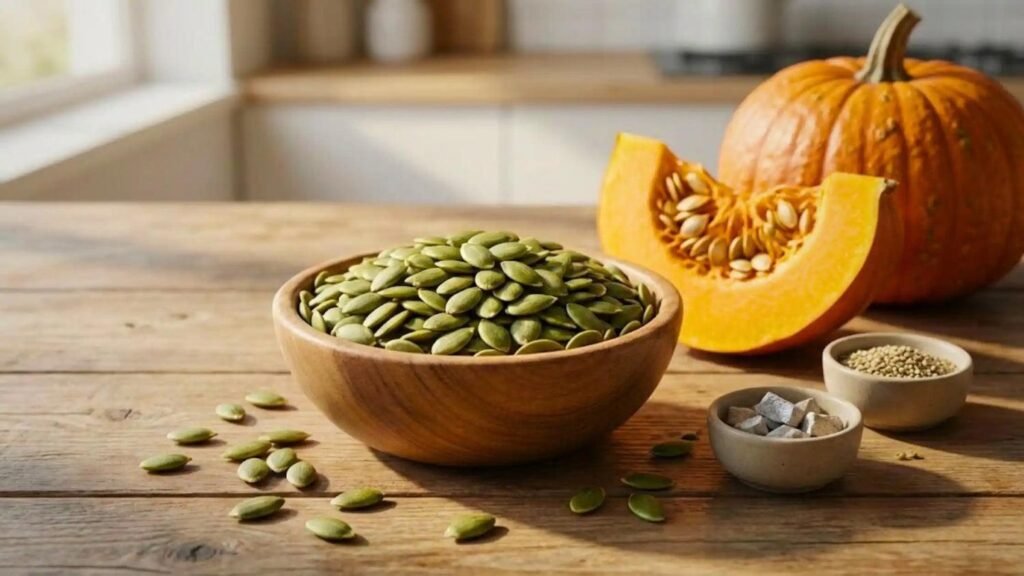
Pumpkin seeds may be small, but they can add plenty of nutrition and crunch to everyday meals. Often removed while preparing pumpkins, these edible seeds are also sold separately in grocery stores and supermarkets.
They can be eaten roasted, added to breakfast dishes or mixed with salads. Their mild nutty flavour makes them easy to combine with many common foods.
Pumpkin seeds contain plant-based protein, dietary fibre, healthy fats and minerals such as magnesium, zinc and iron. They can be a useful part of a balanced diet when eaten in suitable portions.
Here are seven simple reasons to include pumpkin seeds in your regular food routine.
1. Pumpkin Seeds Provide Plant-Based Protein
Protein is an important part of everyday nutrition. It helps the body build and maintain muscles and supports several normal body functions.
Pumpkin seeds provide plant-based protein, making them a useful addition to meals for people who enjoy nuts, seeds and other plant foods.
You can sprinkle a small amount over a bowl of curd or add them to homemade breakfast mixes. They can also be combined with other seeds and nuts for a simple snack.
However, pumpkin seeds should not be your only source of protein. Include other foods such as dal, beans, milk, curd and paneer as part of a varied diet.
2. They Contain Dietary Fibre
Dietary fibre is important for normal digestion and bowel movements. Pumpkin seeds contain fibre, which adds to the nutritional value of this small food.
Adding fibre-rich foods to daily meals can also help make meals more satisfying. Pumpkin seeds can be included along with fruits, vegetables, whole grains and pulses.
For a simple breakfast, sprinkle some seeds over oats or homemade porridge. You can also add them to a fruit bowl for extra texture.
Remember that a balanced diet should include different sources of fibre rather than depending on one ingredient.
3. They Are a Source of Magnesium
Pumpkin seeds are known for their magnesium content. Magnesium is a mineral that supports normal muscle and nerve function and plays a role in several processes in the body.
It is also involved in maintaining normal energy production and bone health.
Including different magnesium-containing foods in your diet can help add variety to your meals. Other food sources include whole grains, nuts, beans and leafy green vegetables.
A small serving of pumpkin seeds can be an easy way to include another source of this mineral in your regular food choices.
4. They Contain Healthy Fats
Pumpkin seeds contain unsaturated fats, which are commonly included in balanced eating plans. These fats are found in several plant foods, including nuts, seeds and certain oils.
Adding a variety of unsaturated fat sources to meals can be a practical way to improve food choices.
You can use pumpkin seeds as a topping for homemade salads or mix them with other seeds. They can also be added to a bowl of vegetable soup just before serving.
Since seeds are energy-dense, it is sensible to enjoy moderate portions rather than eating large amounts at once.
5. They Provide Zinc
Zinc is an essential mineral that supports normal immune function, wound healing and several other body processes.
Pumpkin seeds contain zinc and can contribute to its intake through food. Other sources include beans, nuts, dairy products and whole grains.
A varied diet is important because no single food provides everything the body needs. You can combine pumpkin seeds with different foods to make your meals more balanced.
6. They Make Everyday Snacks More Interesting
Choosing snacks can become repetitive when the same packaged foods are eaten every day. Pumpkin seeds offer a simple alternative that can be kept in a small airtight container.
You can enjoy a small handful of plain roasted seeds during an afternoon break. They can also be mixed with almonds, raisins and other nuts to prepare a homemade snack.
Choose plain or lightly roasted varieties if you want to avoid unnecessary added salt, sugar or flavouring.
If you buy packaged seeds, check the ingredient list and choose a product that suits your food preferences.
7. They Are Easy to Add to Indian Meals
One useful thing about pumpkin seeds is that they do not require complicated preparation. They can be added to several familiar dishes without changing the taste too much.
Sprinkle them over poha, upma or vegetable salads. You can also add them to homemade chutneys, smoothies, curd bowls and breakfast porridge.
For a simple option, lightly roast the seeds in a pan and allow them to cool before storing them in an airtight container.
You can also use seeds removed from a fresh pumpkin. Clean away the pulp, wash them properly and dry them before roasting. Make sure they are stored in a clean, dry place.
How Much Pumpkin Seeds Should You Eat?
Pumpkin seeds are nutritious, but they are also calorie-dense. A small handful is generally enough to add flavour and texture to a meal or snack.
People with seed allergies or specific dietary requirements should check whether pumpkin seeds are suitable for them. Choose fresh seeds and avoid those with an unusual smell or signs of spoilage.
Final Thoughts
Pumpkin seeds are a simple food that provides plant-based protein, fibre, healthy fats and useful minerals. They can be added to breakfast, salads, snacks and many homemade dishes.
You do not need to make major changes to your eating routine to enjoy them. Start with a small portion and combine them with other nutritious foods for a varied and balanced diet.