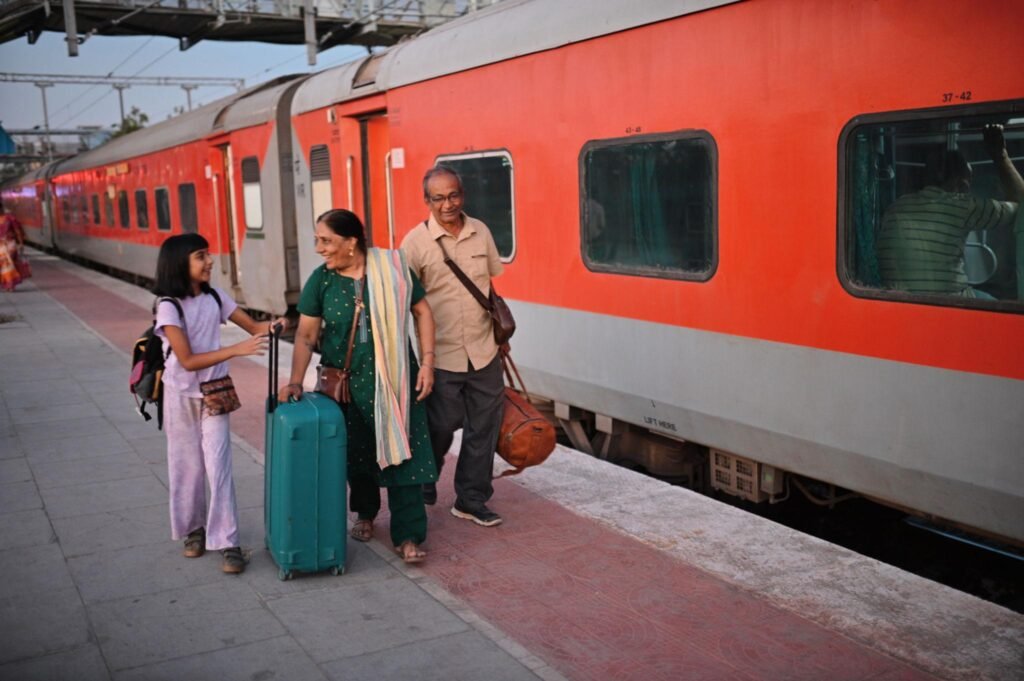
A family trip can become a special memory, especially when parents get a chance to visit a new place or meet relatives. Train journeys are a popular choice for many Indian families because they offer the chance to sit together, enjoy the changing views and travel without spending the entire journey on the road.
However, travelling by train with elderly parents needs a little extra planning. Long queues, crowded platforms, heavy luggage and long waiting periods can make the experience tiring.
A few simple arrangements before leaving home can make the journey more comfortable. From choosing the right seats to packing medicines and snacks, small details can make a big difference.
Here are seven useful tips to keep in mind before planning a train journey with elderly parents.
1. Choose the Train and Timing Carefully
The first step is to select a train that suits your parents’ comfort and routine. Do not choose a journey only because the ticket is cheaper or the train reaches the destination a little earlier.
Check the departure and arrival timings before booking. A train that leaves very early in the morning or reaches the destination late at night may be inconvenient, especially if your parents find it difficult to travel during those hours.
Also consider the total journey time and the number of stops. If possible, choose a direct train instead of one that requires changing trains at a busy station.
A little extra planning can help avoid unnecessary rushing.
2. Book Comfortable Seats in Advance
Seat selection is important when travelling with elderly family members. Try to book tickets together so that everyone can sit close to each other.
If your parents have difficulty climbing, a lower berth may be more convenient in sleeper or AC sleeper coaches. However, berth preferences are subject to availability and cannot always be guaranteed.
Check the coach and berth details after booking. If you have any special seating needs, understand the available options before making the reservation.
Booking early may give you more choices and reduce last-minute stress.
3. Pack Light and Keep Important Items Handy
Carrying too much luggage can make a train journey difficult. Try to pack only the clothes and essentials needed for the trip.
Use bags that are easy to carry and have comfortable handles. Avoid keeping all important items in one large suitcase.
Keep identity documents, tickets, phone chargers, medicines and some cash in a small bag that stays with you. It should be easy to reach without opening the main luggage repeatedly.
If your parents use spectacles, hearing aids or other personal items, pack them carefully and keep them in a familiar place.
4. Carry Regular Medicines and Basic Essentials
If your parents take regular medicines, make sure they have enough for the entire journey and the planned stay. Keep them in their original packaging whenever possible.
It is useful to carry a written list of their regular medicines and important health-related details. Do not change their usual routine or dosage just because you are travelling.
Also pack everyday essentials such as tissues, hand sanitiser, a water bottle, a light shawl and comfortable footwear.
Keep these items in an easily accessible bag rather than placing everything inside the main suitcase.
5. Plan Meals and Drinking Water
Food arrangements deserve attention during a long train journey. Your parents may prefer familiar meals instead of trying something new while travelling.
Carry simple homemade snacks that are easy to eat and store safely. You can also check food options available on the train or at major stations before the journey.
Keep drinking water available and remind everyone to stay hydrated during the trip. Avoid packing food that can spoil quickly, especially if the journey is long or the weather is warm.
If your parents follow a particular food routine, plan accordingly instead of depending entirely on last-minute purchases.
6. Reach the Station With Enough Time
Reaching the station at the last minute can create unnecessary pressure. Give yourself enough time to enter the station, check the platform and reach the correct coach.
Platforms can be crowded, and walking long distances may be tiring for elderly passengers. Avoid rushing them through the station.
Check the train status and platform information before leaving home. If you need assistance with luggage or mobility, check the railway’s available support services and arrange them in advance where possible.
Stay together and avoid leaving elderly family members alone in a crowded area.
7. Keep the Journey Relaxed and Comfortable
Once the train starts, allow your parents to settle in comfortably. Help them arrange their bags, water and other essentials within easy reach.
A small pillow, light blanket or shawl may be useful depending on the season and coach conditions. Encourage them to move carefully when getting up or walking through the coach.
Do not fill the journey with too many activities or plans. Let them enjoy the views, talk with family members or simply rest.
Most importantly, be patient. A relaxed journey is often more enjoyable than trying to follow a tight schedule.
Make Family Train Travel Easier With Simple Planning
Travelling by train with elderly parents does not have to be stressful. The key is to think about their comfort before booking tickets and packing bags.
Choose suitable timings, arrange seats together, keep essential items nearby and allow enough time at the station. Check the railway’s latest rules and available assistance services before departure.
With a little preparation and patience, the journey can become an enjoyable part of the family holiday rather than just a way to reach the destination.