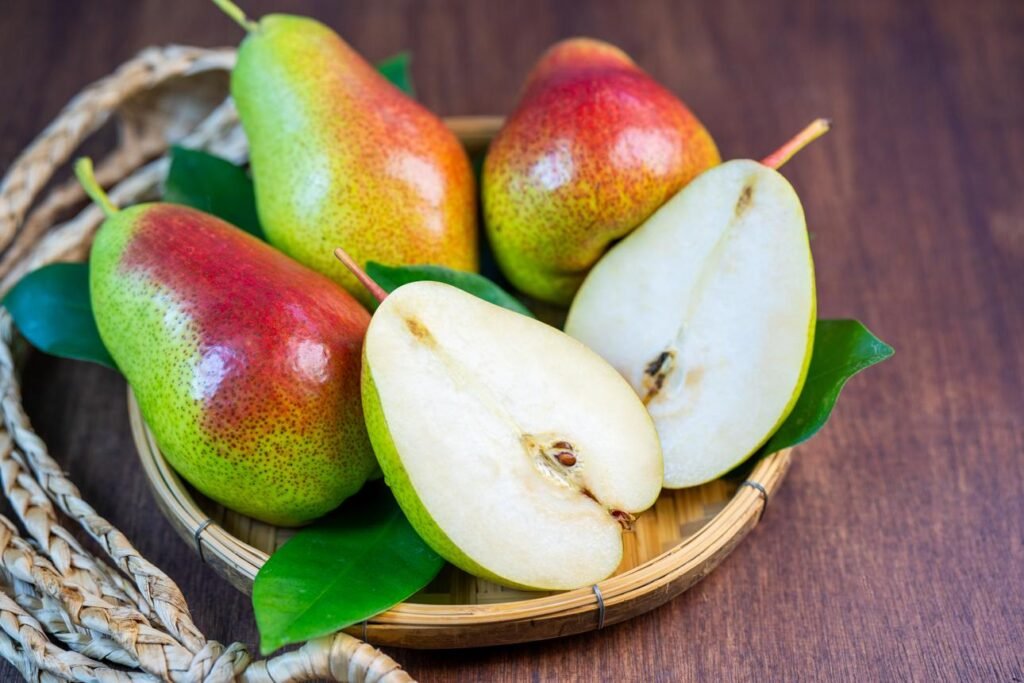
Pears are a popular fruit enjoyed for their mild sweetness, soft texture and refreshing taste. They are easy to find in many markets and can be eaten as a quick snack, added to fruit salads or used in simple homemade recipes.
Apart from their taste, pears provide useful nutrients such as dietary fibre, vitamin C and potassium. They also contain a high amount of water, making them a refreshing choice, especially when you want something light between meals.
You can eat pears with their skin after washing them properly, as the skin contains a good amount of fibre. Like other fruits, they are best enjoyed as part of a varied and balanced diet.
Here are seven simple benefits of eating pears and some easy ways to include them in your daily routine.
1. Pears Are a Good Source of Dietary Fibre
One of the main benefits of pears is their fibre content. A medium-sized pear provides a useful amount of dietary fibre, which supports normal digestion and helps maintain regular bowel movements.
Fibre also adds bulk to food and can help you feel satisfied after eating. This makes a whole pear a practical snack when you feel hungry between meals.
For more fibre, wash the pear properly and eat it with the skin. You can also combine it with oats or plain yoghurt for a filling breakfast.
2. They Help Add More Water to Your Diet
Pears contain a high amount of water, which contributes to your daily fluid intake. Eating water-rich fruits can be a simple way to add variety to your diet while enjoying a naturally sweet snack.
A chilled pear can feel especially refreshing during warm weather. You can also cut it into small pieces and add it to a bowl of mixed fruits.
However, fruit should not replace drinking water. Continue to drink water regularly throughout the day according to your needs and activity level.
3. Pears Provide Vitamin C
Vitamin C is an important nutrient that supports normal immune function and helps the body make collagen. It also helps the body absorb iron from plant-based foods.
Pears provide some vitamin C, although the amount is not as high as in fruits such as oranges, guava and amla.
Including different fruits in your meals is a simple way to get a wider range of nutrients. You can enjoy pears alongside other seasonal fruits instead of depending on just one variety.
4. They Contain Useful Plant Compounds
Pears contain natural plant compounds, including flavonoids and other antioxidants. These compounds are found in many fruits and vegetables and help protect cells from damage caused by unstable molecules.
The skin of pears contains several of these plant compounds, which is another reason to wash the fruit properly and eat it unpeeled when suitable.
Different varieties may have different amounts of plant compounds. Eating a colourful variety of fruits and vegetables is a practical way to include different nutrients in your meals.
5. Pears Can Make a Filling Snack
A whole pear contains fibre and water, which can make it more satisfying than some snacks that are low in these components.
If you feel hungry in the afternoon, try eating a pear with a small handful of almonds or walnuts. The combination provides different nutrients and makes a convenient snack.
You can also add chopped pear to plain yoghurt. This gives the yoghurt natural sweetness without needing to add much extra sugar.
Keep portion sizes in mind and choose snacks according to your daily food needs.
6. They Provide Potassium
Pears contain potassium, a mineral that plays an important role in normal muscle function, nerve signalling and fluid balance in the body.
Although pears are not among the richest sources of potassium, they can contribute to your overall intake.
Other foods that provide potassium include bananas, potatoes, spinach, beans and yoghurt. Including a mix of these foods in your regular meals can help create a balanced diet.
7. Pears Are Easy to Use in Everyday Recipes
Another useful benefit of pears is that they can be included in many simple dishes. You do not need special cooking skills or complicated ingredients to enjoy them.
Add chopped pears to breakfast oats, fruit salads or yoghurt bowls. You can also blend them into a smoothie with milk or plain yoghurt.
For a warm snack, sliced pears can be lightly cooked with cinnamon. They can also be added to homemade pancakes or served with nuts.
Choose fresh, firm pears for recipes where you want them to hold their shape. Softer ripe pears work well in smoothies and mashed fruit preparations.
How to Choose and Store Pears
When buying pears, look for fruits without large bruises, cuts or signs of spoilage. Some varieties become slightly soft near the stem when ripe.
Keep unripe pears at room temperature until they are ready to eat. Once ripe, store them in the refrigerator to help maintain their freshness.
Wash pears under clean running water before cutting or eating them. If you cut a pear in advance, keep the pieces in a covered container in the refrigerator.
Add Pears to Your Daily Fruit Routine
Pears are a simple and tasty fruit that provide fibre, water, vitamin C and potassium. They are easy to carry, require little preparation and can be enjoyed in several ways.
Eat them whole, add them to breakfast or combine them with nuts for a quick snack. Along with other fruits and vegetables, pears can be a useful part of a balanced everyday diet.