Smartphones have become an important part of everyday life. We use them to talk to people, check emails, read news, watch videos, shop online and manage work. However, the same phone that makes life easier can also take away a lot of our attention.
You may pick up your phone to check one message and end up scrolling for twenty minutes. Sometimes, even when there is no important notification, you unlock your screen out of habit.
The good news is that you do not need to stop using your phone or delete every social media app. A few simple changes can help you use it more thoughtfully and make more time for the things that matter.
Here are six practical ways to make your phone less distracting.
1. Turn Off Unnecessary Notifications
Notifications are one of the biggest reasons people check their phones repeatedly. A message alert, shopping offer, game reminder or social media update can interrupt your work even when it is not important.
Start by checking which apps send you the most notifications. Keep alerts for important calls, messages, banking updates and work-related apps.
You can turn off notifications from shopping apps, games and social media platforms that do not need your immediate attention.
This small change can make your phone feel much quieter and help you focus on one task at a time.
2. Remove Distracting Apps From Your Home Screen
The apps you see every time you unlock your phone can influence what you do next.
If social media, video platforms and shopping apps are placed on the first screen, you may open them without thinking.
Move these apps into a separate folder or another screen. Keep useful apps such as your calendar, notes, maps and essential communication tools on the home screen.
You can also use a simple wallpaper without too many colours or widgets. A cleaner screen can make it easier to avoid opening apps just because they are visible.
3. Set Daily Limits for Social Media
Social media can be entertaining and useful, but spending too much time scrolling may leave less time for other activities.
Most smartphones have built-in screen time or digital wellbeing features. These tools allow you to check how much time you spend on individual apps and set daily usage limits.
Start with a realistic limit rather than trying to stop using social media completely. For example, you could set aside specific periods for checking updates instead of opening an app every few minutes.
If you reach your limit, take it as a reminder to move on to another activity.
4. Avoid Checking Your Phone Immediately After Waking Up
Many people reach for their phones as soon as they wake up. They start checking messages, social media posts and news updates before even getting out of bed.
This habit can make your morning feel rushed and fill your mind with information before the day has properly started.
Try keeping your phone away from your pillow. Give yourself the first 15 to 20 minutes after waking up without scrolling.
You can use that time to drink water, get ready, open the windows or plan your day. If you use your phone as an alarm, keep it slightly away from your bed.
5. Keep Your Phone Away During Important Tasks
Even when you are not using your phone, having it next to you can make you think about checking it.
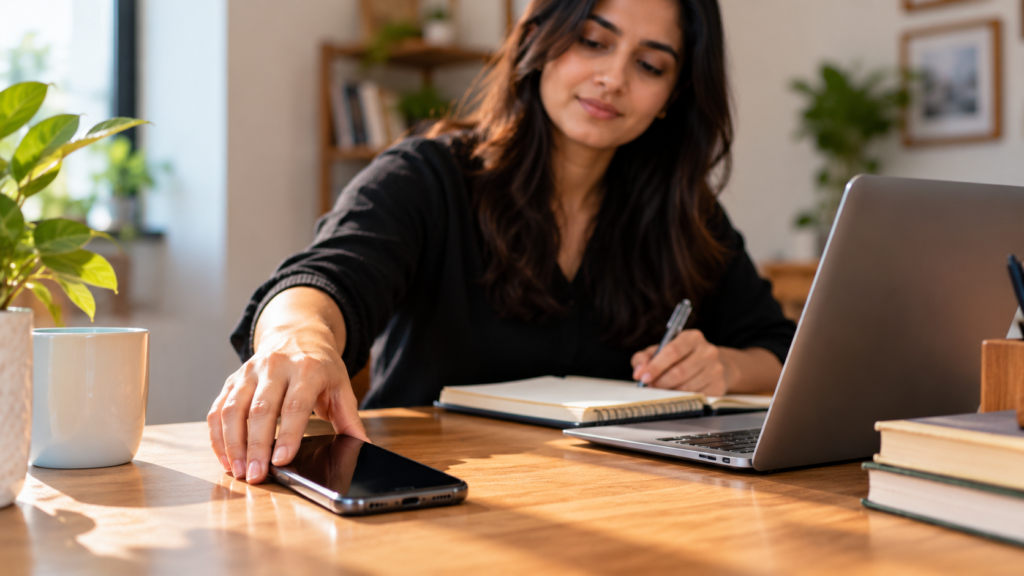
During work, study sessions, reading or important conversations, place your phone somewhere you cannot easily reach.
If you need it for a specific task, use only the required app and avoid switching between different screens.
You can also try setting a fixed period for focused work, followed by a short break. This gives you time to complete tasks without repeatedly interrupting yourself.
6. Create Phone-Free Moments Every Day
You do not need to avoid your phone for an entire day to build healthier habits. Start by creating a few phone-free moments in your regular routine.
For example, avoid using your phone during meals, while talking to family members or during a short walk. You can also keep the phone away for some time before going to sleep.
These small breaks allow you to enjoy activities without constantly checking for updates.
Over time, you may find it easier to spend time with people, complete daily tasks and relax without feeling the need to look at your screen.
Final Thoughts
Your smartphone is a useful tool, but it should not control every part of your day. Small changes such as turning off unnecessary notifications, organising your home screen and creating phone-free moments can help you use it more carefully.
You do not have to follow every tip at once. Start with one or two changes and see what works best for your routine.
The aim is not to spend zero time on your phone. It is to make sure that you are using your time intentionally rather than checking your screen out of habit.