Navratri begins on October 11, and if you have not bought a new outfit yet, there is still time to put together a festive look. You might not even need to go shopping. A kurti in your wardrobe, an old lehenga, a colourful dupatta or a pair of statement earrings could be enough to create something different.
Festive fashion often comes with the pressure to wear something new for every occasion. With nine days of celebrations ahead, that can quickly become expensive. But repeating clothes does not mean repeating the same look. Small changes in styling can make a familiar outfit feel different without spending money on an entirely new set.
This approach also makes sense for clothes that spend most of the year tucked away in a cupboard. Instead of buying another outfit for one evening, you can bring those pieces back into use.
1. Give Your Old Lehenga a Different Look
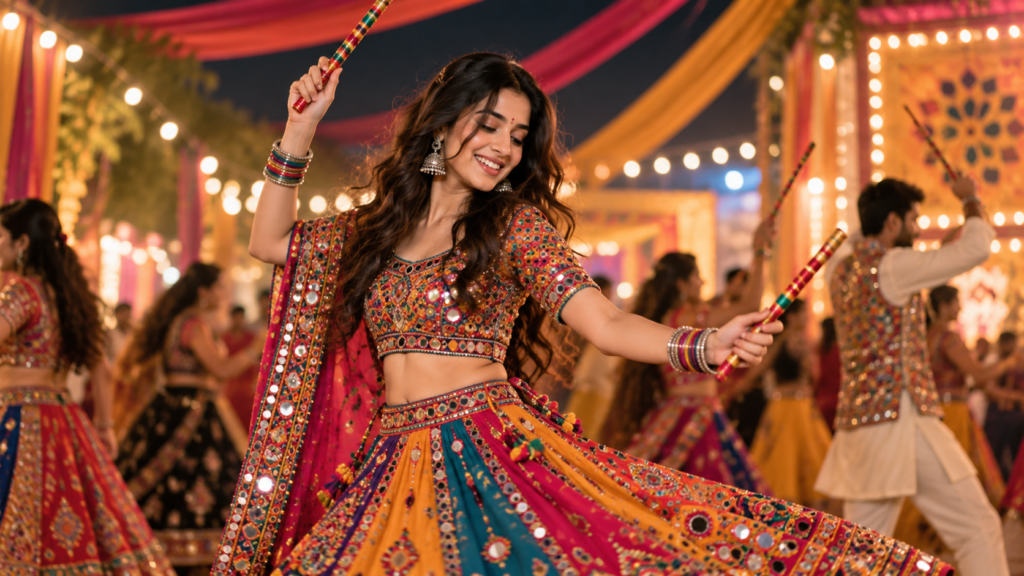
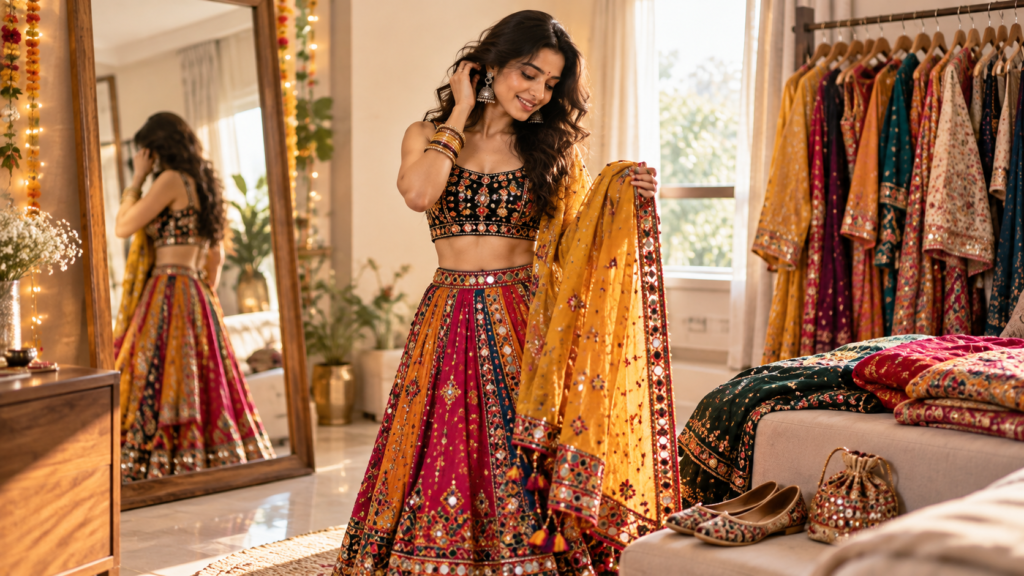
An old lehenga can look surprisingly different when you change the blouse. If your skirt has heavy embroidery or mirror work, try pairing it with a plain fitted blouse or a simple crop top that complements one of its colours.
You can also change the way you wear the dupatta. Drape it over one shoulder instead of styling it across both arms, or pin it neatly at the waist if that works with the outfit. The idea is to change the overall shape without hiding the details that make the lehenga special.
Before wearing it for Garba, check that the waistband fits comfortably and the hem does not catch under your footwear. A beautiful outfit is much easier to enjoy when you can move freely.
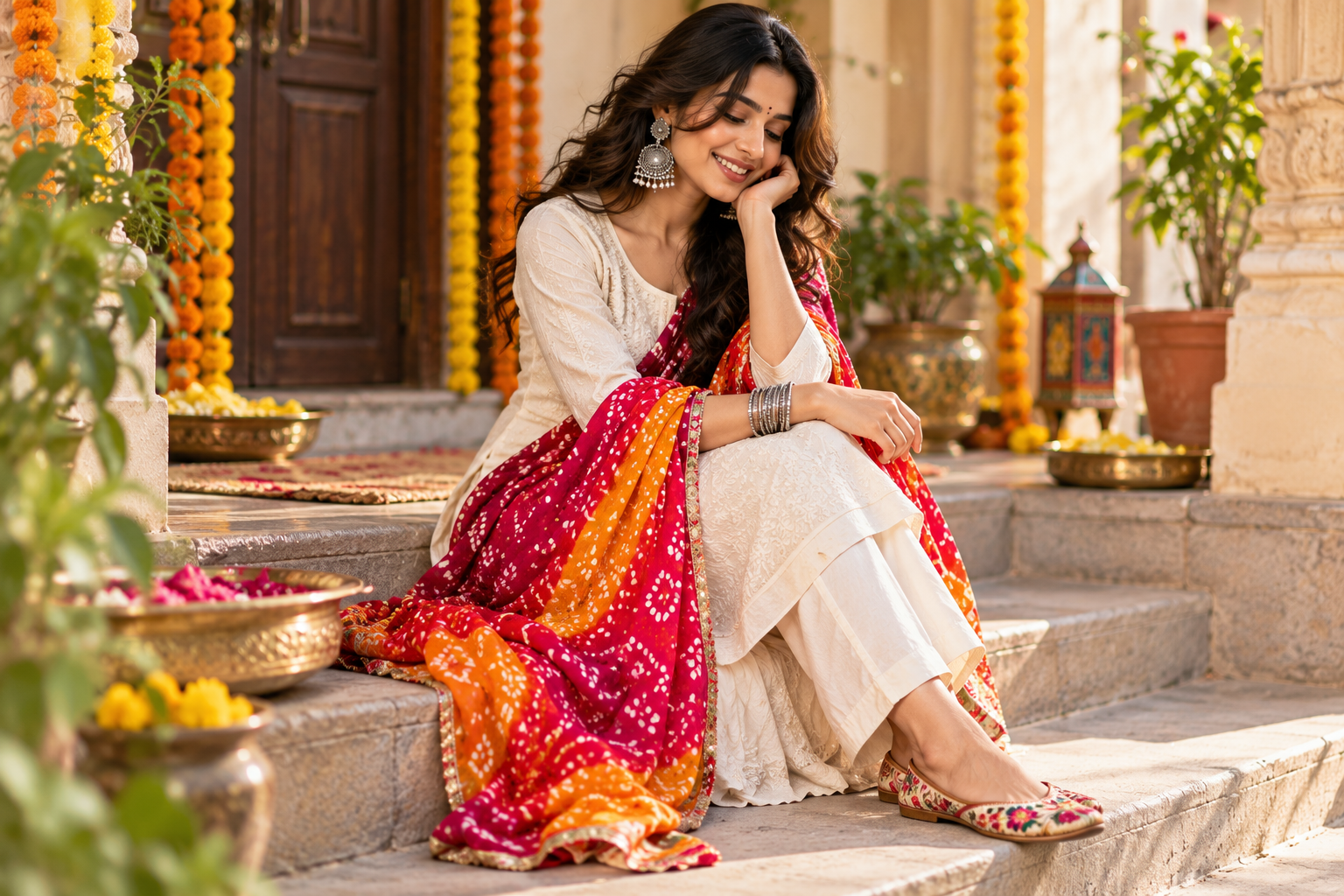
2. Turn a Simple Kurti Into a Festive Outfit
A simple kurti can work for a family gathering, a small puja or even a casual festive evening. The trick is to choose accessories that add colour without making the outfit look crowded.
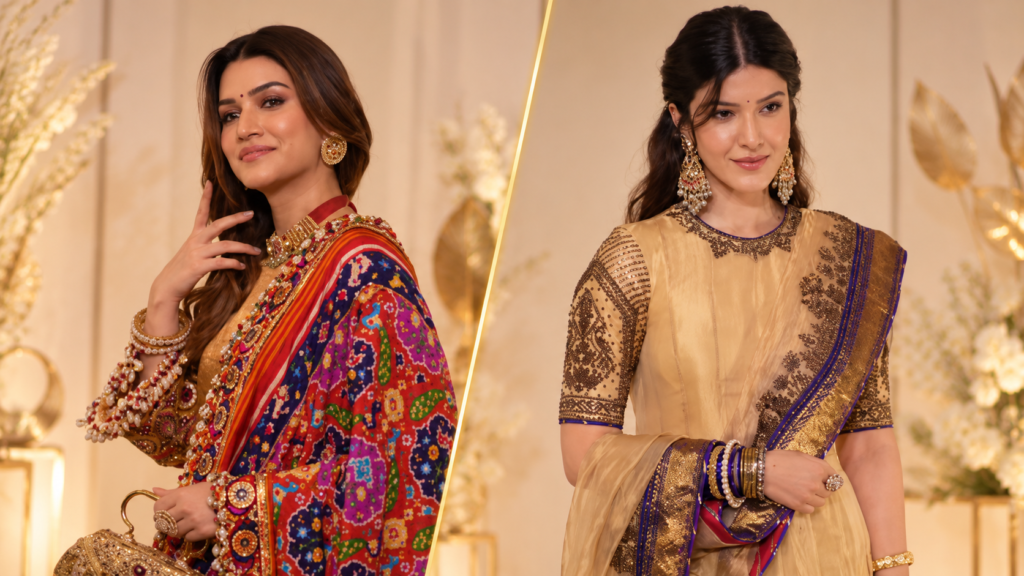
Try pairing a plain kurti with a bandhani or printed dupatta. Add oxidised earrings, a few bangles and juttis if they suit the outfit. A contrasting dupatta can make a neutral kurta feel more festive, while a matching one creates a more coordinated look.
You do not need to add every accessory you own. If the dupatta has a bright print, keep the jewellery relatively simple. If the outfit is plain, statement earrings can become the main feature.
3. Borrow From Your Own Family Wardrobe
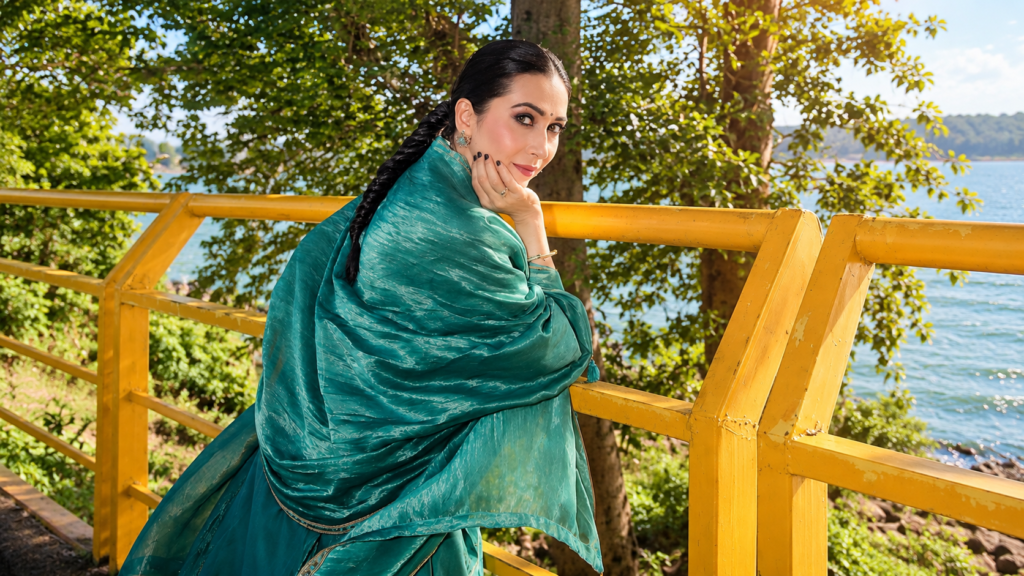
Some of the most interesting festive pieces may already belong to someone in your family. A mother’s silk saree, an embroidered dupatta or a relative’s traditional jacket might work beautifully with clothes you already wear.
An older saree can be styled with a contemporary blouse, while a traditional jacket can be paired with a plain kurta and trousers. You could also wear a family heirloom as it is, letting its original embroidery or fabric stand out.
Not every old garment needs to be altered. If a piece has sentimental value or delicate embroidery, try different combinations before deciding to cut or restitch it. Simple styling changes are easier to reverse and allow you to preserve the original garment.
4. Change the Accessories, Not the Entire Outfit
Accessories can change the mood of an outfit without requiring a wardrobe overhaul.
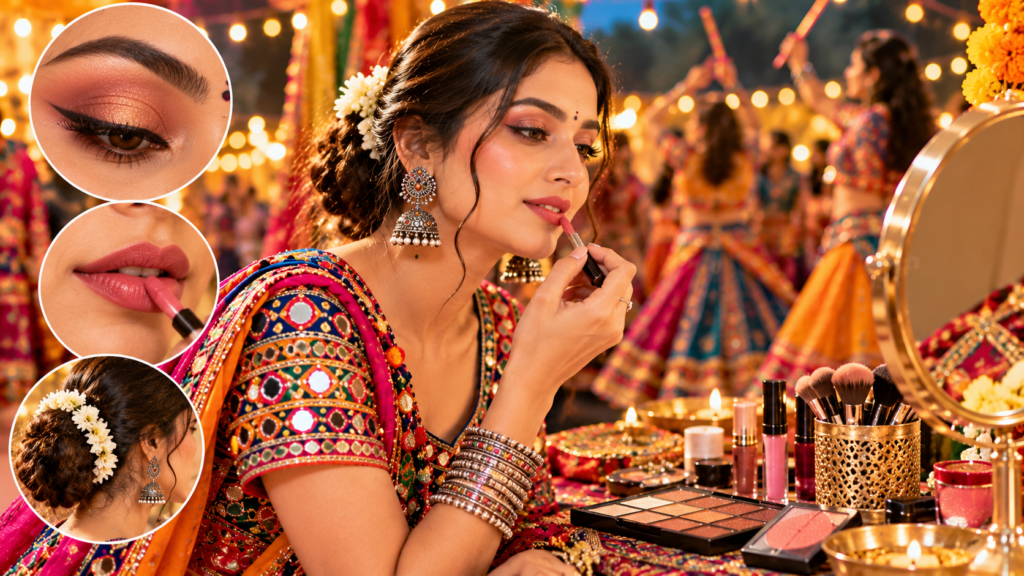
For one evening, you could wear silver-toned jewellery and colourful bangles. For another, switch to gold-toned earrings and a more understated bag. A different pair of footwear or a new hairstyle can also change the overall appearance.
The important thing is to choose accessories that work with the clothes rather than adding more simply because it is a festival. For Garba, secure your dupatta, choose footwear you can dance in and avoid jewellery that gets in the way of movement.
5. Plan a Few Outfits Around the Navratri Colours
Navratri’s traditional colour sequence gives you another way to plan outfits without buying nine new sets. In 2026, the festival runs from October 11 to October 19. The commonly followed colour sequence begins with orange, followed by white, red, royal blue, yellow, green, grey, purple and peacock green. The sequence is a popular dressing custom rather than a requirement.
You can use a neutral kurta as a base and change the dupatta or accessories to bring in a different colour. A white outfit, for example, can be paired with an orange dupatta for one day and a green one for another. If you already own colourful blouses, skirts or jackets, use them to create combinations rather than purchasing a complete outfit for each day.
A little planning also helps you avoid last-minute shopping and gives you time to check whether clothes need ironing, minor repairs or alterations.
Navratri dressing should be enjoyable, not another expense to worry about. Before buying anything new this year, spend a few minutes looking through your wardrobe. You may find that the outfit you want is already there; it simply needs a different combination.