India is known for its forts, palaces and ancient temples, but some of its most interesting architectural wonders are found underground. Stepwells, also called baolis or vavs in different regions, were built to store water and provide access to it during different seasons.
These structures were not just useful water sources. Many were designed with beautiful stone carvings, pillars, corridors and detailed steps. Some also served as places where people could rest and spend time during hot days.
Today, several historic stepwells have become popular attractions for travellers interested in history, photography and architecture.
If you enjoy exploring places with a story behind them, here are seven famous stepwells in India worth visiting.
1. Rani ki Vav, Patan, Gujarat
Rani ki Vav is one of the most impressive stepwells in India. Located in Patan, Gujarat, it was built during the 11th century and is known for its detailed stone carvings.
The stepwell has several levels connected by steps and beautifully decorated pillars. Its walls feature sculptures of Hindu deities, religious figures and scenes from traditional stories.
The structure was built as a memorial and water storage site. Its architecture shows the skill of craftsmen from that period.
Rani ki Vav is also recognised as a UNESCO World Heritage Site. Visitors can explore its different levels and observe the carvings closely. It is a must-visit place for anyone interested in India’s historic architecture.
2. Chand Baori, Abhaneri, Rajasthan
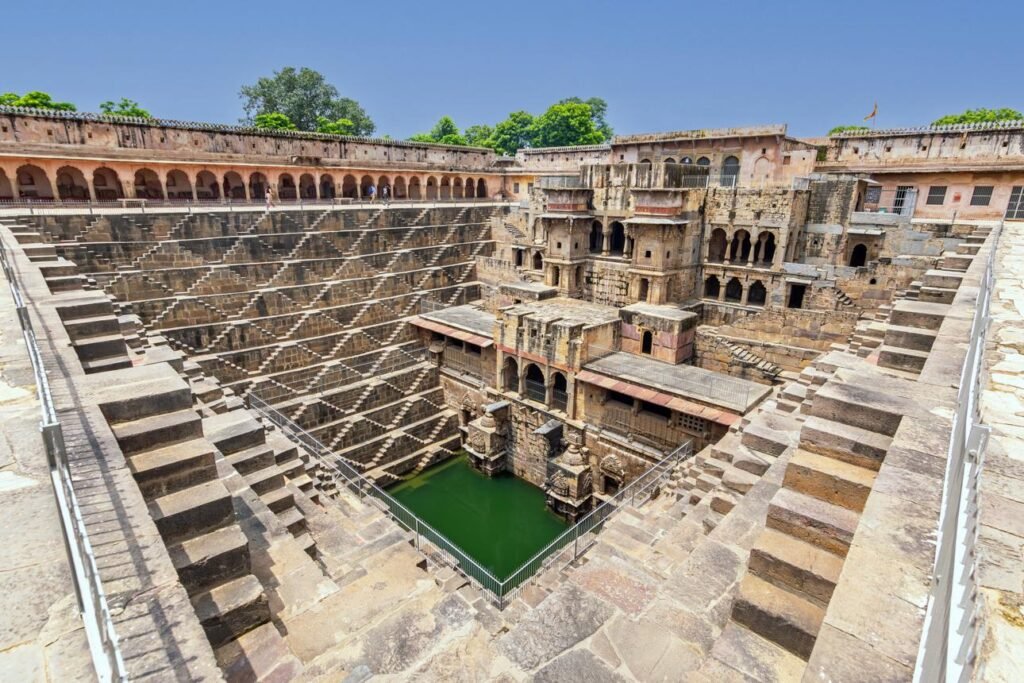
Chand Baori is located in Abhaneri village in Rajasthan’s Dausa district. It is famous for its deep structure and thousands of narrow steps arranged in a striking geometric pattern.
The steps form a symmetrical design along three sides of the well, while the fourth side has galleries and pavilions. The arrangement creates a unique visual effect that attracts photographers and architecture lovers.
Built several centuries ago, Chand Baori was designed to collect and store water. Its depth also helped keep the lower sections cooler during hot weather.
The stepwell is a popular stop for travellers exploring the region around Jaipur and Dausa. Visitors should take care near the edges and follow local safety instructions.
3. Adalaj Stepwell, Gujarat
Adalaj Stepwell is located in Adalaj village near Ahmedabad and Gandhinagar. It is known for its beautiful carvings, detailed pillars and traditional design.
Built in the 15th century, the stepwell has multiple levels and an octagonal opening that allows natural light to enter. Its walls feature carvings of flowers, animals and religious symbols.
The structure reflects a mix of architectural influences from the period in which it was built. Visitors can walk through the different levels and notice how the design changes as they move deeper inside.
Its location also makes it a convenient stop for people visiting Ahmedabad and nearby attractions.
4. Agrasen ki Baoli, Delhi
Agrasen ki Baoli is a historic stepwell located in central Delhi, close to Connaught Place. Unlike stepwells found in rural areas, this one is surrounded by the busy streets of the capital.
The structure has long flights of stone steps leading down towards the water area. Its simple yet striking design makes it a popular location for photography and history walks.
The exact date of its original construction is not firmly established, and the structure seen today is generally associated with later rebuilding. It is protected as a historical monument.
Since it is located in central Delhi, visitors can include it in a short city sightseeing plan.
5. Toorji Ka Jhalra, Jodhpur, Rajasthan
Toorji Ka Jhalra is a historic stepwell in the old part of Jodhpur. It was built in the 18th century and is known for its red sandstone construction and symmetrical steps.
The stepwell was created as a water source for the local community. Over time, it became an important part of the old city’s traditional water system.
Today, it is surrounded by heritage buildings, narrow lanes and cafés. Visitors can explore the area on foot and enjoy the traditional architecture of Jodhpur.
It is an interesting stop for travellers who want to discover more than the city’s famous forts and palaces.
6. Pushkarani, Hampi, Karnataka
Hampi is known for its ancient temples, stone monuments and remains of the Vijayanagara Empire. Among its interesting structures are the traditional temple tanks known as pushkaranis.
The stepped tank near the Royal Enclosure is particularly notable for its carefully arranged stone steps and geometric design. It was part of the water management and religious landscape of the historic city.
Unlike some stepwells, pushkaranis were generally connected with temple activities and ceremonial use. Their design reflects the importance of water in traditional Indian architecture.
Visitors exploring Hampi can include the stepped tank along with the Royal Enclosure and nearby monuments.
7. Rajon Ki Baoli, Delhi
Rajon Ki Baoli is another historic stepwell located inside Mehrauli Archaeological Park in Delhi. It is believed to date back to the Lodi period and is known for its stone arches and multi-level design.
The structure has steps leading down to the water area, along with arched passages and small rooms along its sides. Its architecture gives visitors an idea of how water structures were designed in earlier times.
The stepwell is part of a larger heritage area that includes tombs, monuments and other historic remains. Travellers can explore several attractions during the same visit.
Tips for Visiting Historic Stepwells
Before visiting a stepwell, check its opening hours, entry rules and current access conditions. Some sites are maintained by heritage authorities, while others may have limited facilities.
Wear comfortable footwear because steps can be uneven or steep. Avoid climbing restricted areas, touching fragile carvings or leaving litter behind.
A local guide can also help explain the history and architectural details that visitors might otherwise miss.
Stepwells show how earlier communities combined practical water storage with thoughtful design. From the detailed carvings of Rani ki Vav to the geometric steps of Chand Baori, each structure offers a different glimpse into India’s architectural past.
For travellers who enjoy history and heritage, these places can make a memorable addition to a trip.