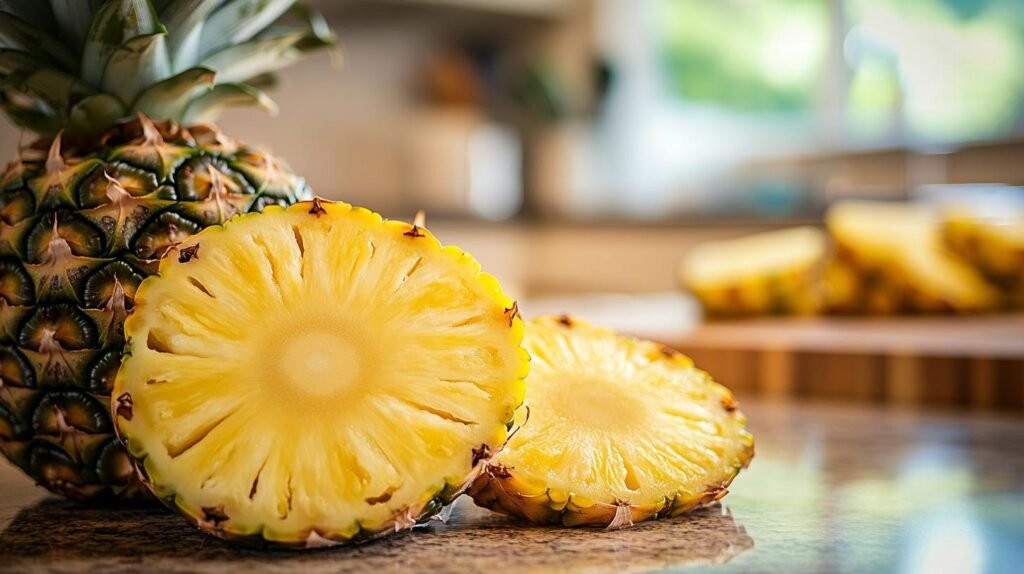
Pineapple is a popular tropical fruit known for its sweet and tangy taste. It is enjoyed in fruit salads, fresh juices, smoothies and many everyday dishes. Apart from its refreshing flavour, pineapple also contains useful nutrients that can be part of a balanced diet.
The fruit provides vitamin C, dietary fibre, manganese and water. These nutrients support different normal functions of the body and make pineapple a good option to include in a varied eating routine.
You do not need to eat large amounts to enjoy it. A suitable serving of fresh pineapple can add flavour and variety to your meals. Here are seven benefits of eating pineapple that make it worth adding to your fruit bowl.
1. Provides Vitamin C
One of the main nutritional benefits of pineapple is its vitamin C content. This vitamin supports the normal functioning of the immune system and helps the body make collagen, a protein found in the skin, bones and other tissues.
Vitamin C also helps the body absorb iron from plant-based foods. This is useful when pineapple is included as part of meals that contain vegetables, lentils or other plant sources of iron.
Eating pineapple is one way to add vitamin C to your diet, although it should not be treated as a replacement for a variety of fruits and vegetables.
2. Contains Dietary Fibre
Pineapple provides dietary fibre, which is an important part of a balanced eating routine. Fibre supports normal digestion and helps maintain regular bowel movements.
Including fibre-rich foods in daily meals can also make meals more satisfying. Pineapple can be combined with other fruits, oats or plain curd to create a filling snack.
However, pineapple should not be the only source of fibre in your diet. Vegetables, whole grains, pulses, nuts and seeds also provide useful amounts.
3. Helps Add More Water to Your Diet
Pineapple has a high water content, which makes it a refreshing fruit, especially during warm weather. Eating water-rich foods can contribute to overall daily fluid intake.
A bowl of chilled pineapple pieces can be a pleasant snack on a hot afternoon. It can also be added to a fruit salad for extra freshness.
However, eating pineapple does not replace drinking enough water. Regular water intake remains important throughout the day, especially when the weather is hot or you are physically active.
4. Provides Manganese
Pineapple contains manganese, a mineral that the body needs in small amounts. Manganese plays a role in normal bone formation and several processes involved in using nutrients.
The body requires different vitamins and minerals to function properly. Including a range of fruits, vegetables, whole grains and other nutritious foods helps provide these nutrients.
Pineapple can contribute to manganese intake, but it is not necessary to depend on one fruit for meeting daily nutritional needs.
5. Contains Natural Plant Compounds
Pineapple contains natural plant compounds, including bromelain, a group of enzymes found in the fruit and its stem. The fruit also contains other plant compounds that contribute to its nutritional profile.
These substances are one reason pineapple is often discussed as an interesting tropical fruit. However, eating pineapple should not be considered a treatment for any health condition.
Fresh pineapple can simply be enjoyed as part of a varied diet that includes different fruits and vegetables.
6. Makes Healthy Snacks More Interesting
One practical benefit of pineapple is that it can make everyday snacks more enjoyable. Its natural sweetness and tangy flavour can add variety without needing extra sugar.
You can combine fresh pineapple with a few nuts, add it to a bowl of plain curd or mix it with other seasonal fruits. Small pieces can also be added to homemade salads.
If you prefer savoury flavours, pineapple can be used in fresh salsa or served with suitable meals. These options make it easier to enjoy fruit in different ways.
7. Offers a Fresh Alternative to Sugary Desserts
When you want something sweet after a meal, fresh pineapple can be a simple alternative to some packaged desserts. It has natural sweetness and a refreshing texture.
You can serve chilled pineapple pieces on their own or combine them with other fruits. A homemade fruit bowl can also be a convenient option when you want a light dessert.
Whole fruit is generally a better everyday choice than fruit drinks with added sugar. Choose fresh pineapple instead of relying on sweetened canned versions or packaged juices.
How to Include Pineapple in Your Daily Diet
Choose a fresh pineapple that has a pleasant smell and feels firm rather than damaged or overly soft. Wash the outer surface before cutting it, and use a clean knife and chopping board.
Cut the fruit into small pieces and store leftovers in a covered container in the refrigerator. Eat it while fresh and avoid leaving cut fruit at room temperature for long periods.
Some people may experience mouth irritation or acidity after eating pineapple. If it does not suit you, reduce the amount or avoid it. People with specific dietary concerns can ask a qualified health professional for individual guidance.
Enjoy Pineapple as Part of a Balanced Diet
Pineapple is a tasty fruit that offers vitamin C, fibre, manganese and water. It can make snacks and meals more colourful while adding natural sweetness to your daily food choices.
Enjoy it in reasonable portions and combine it with other fruits, vegetables and nutritious foods. A varied diet, rather than relying on one particular food, is a practical way to support everyday health.