Keeping food fresh is not only about buying good-quality groceries. How you store food after bringing it home, cooking it or opening a packet also matters.
Many people leave cooked food on the kitchen counter for hours, put warm leftovers straight into a crowded fridge or store every fruit and vegetable in the same way. These habits may seem harmless, but they can affect food quality and safety.
The good news is that you do not need expensive containers or a completely new kitchen setup to improve food storage. A few simple changes can help you organise your groceries and handle leftovers more carefully.
Here are six common food storage mistakes worth avoiding in your daily routine.
1. Leaving Cooked Food Outside for Too Long
After preparing lunch or dinner, it can be tempting to leave the remaining food on the counter until everyone has finished eating. However, cooked food should not stay at room temperature for long periods.
As a general food safety rule, refrigerate perishable food within two hours. If the surrounding temperature is above 32°C, reduce that time to one hour.
Divide large quantities into smaller, shallow containers so the food cools more quickly. You do not need to wait until it reaches room temperature before refrigerating it.
This is especially important during hot Indian summers, when kitchen temperatures can rise quickly. If food has been left out beyond the recommended safe period, putting it in the fridge later does not necessarily make it safe again.
2. Putting Too Much Food in One Large Container
Storing a large pot of curry, rice or dal in the refrigerator may seem convenient, but the centre of a deep container can take longer to cool.
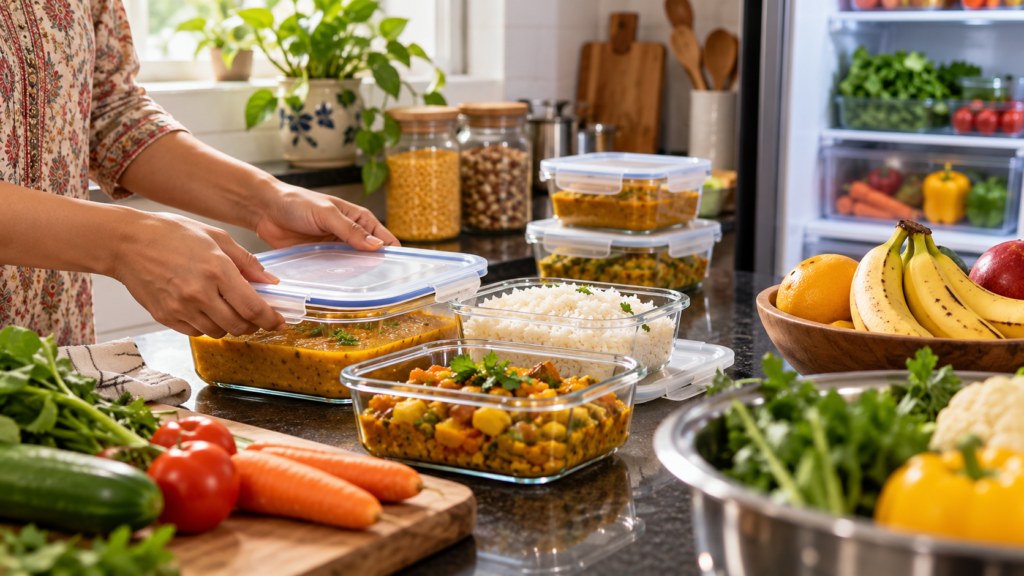
A better option is to divide leftovers into smaller portions before storing them. This allows the food to cool more evenly and makes it easier to reheat only what you need.
Use clean, food-safe containers with secure lids. Keep raw foods separate from cooked meals to reduce the risk of cross-contamination.
Smaller portions can also make everyday meal planning easier. Instead of repeatedly reheating the same large container, take out one serving at a time.
3. Assuming Every Fruit and Vegetable Belongs in the Fridge
Different fruits and vegetables need different storage conditions. Putting everything into the refrigerator immediately is not always the best approach.
For example, whole bananas are commonly kept at room temperature until ripe. Potatoes and onions are generally best stored in a cool, dry and well-ventilated place, away from direct sunlight.
Leafy greens, on the other hand, usually benefit from refrigeration. Keep them dry and remove damaged leaves before storage. Follow the storage instructions on packaged produce when available.
It also helps to avoid washing fruits and vegetables long before you plan to use them unless you can dry them properly. Excess moisture can encourage spoilage in some produce.
A little attention to where each item belongs can help reduce unnecessary food waste.
4. Keeping the Refrigerator Too Full
A crowded refrigerator may look organised from the outside, but tightly packed shelves can restrict the circulation of cold air.
Try to leave enough space between items for air to move. Store raw meat, poultry and seafood in sealed containers on the lowest shelf so that their juices cannot drip onto other foods.
Keep ready-to-eat items separate from raw ingredients. Clean spills promptly, and check the fridge temperature regularly.
For safe storage, the refrigerator should be kept at 4°C or below, while the freezer should generally be at -18°C. A simple appliance thermometer can help you check whether the temperature is suitable.
Avoid opening the refrigerator door unnecessarily for long periods, especially in hot weather.
5. Ignoring Dates and Storage Instructions
Packets of milk, sauces, flour, snacks and other groceries can remain in kitchen cupboards for weeks. Without checking the labels, it is easy to forget when an item was opened or how it should be stored.
Read the storage instructions on the packaging. Some products need refrigeration after opening, even if they were stored on a shelf before that.
For pantry items, use clean, dry containers when appropriate and keep them away from heat and moisture. Label containers with the opening date if you often forget when you started using something.
Do not rely only on smell or appearance to decide whether food is safe. Some harmful bacteria may not change the food’s smell, taste or look.
6. Reheating Leftovers More Than Once
Repeatedly warming an entire container of leftovers can make safe storage harder to manage. Each time you take food out, the temperature may rise and the remaining food may spend longer outside refrigeration.
Instead, divide leftovers into individual portions before storing them. Reheat only the amount you plan to eat, and make sure it becomes hot throughout.
As a general guide, cooked leftovers kept properly refrigerated are often best used within three to four days. If you will not eat them within that time, freezing them promptly can be a better option.
When reheating food in a microwave, stir or rotate it where possible to help heat it evenly. Always follow suitable food safety guidance for the type of food you are handling.
Make Food Storage a Simple Daily Habit
Safe food storage does not require complicated rules or expensive kitchen products. Start by putting perishable food away promptly, using smaller containers for leftovers and checking the instructions on grocery packets.
Keep raw and cooked foods separate, organise your refrigerator so that air can circulate and use older suitable items before opening new ones.
These small habits can help you manage groceries more efficiently and reduce avoidable waste. Most importantly, they make food safety part of your everyday routine rather than something you think about only when food starts to look spoiled.