Looking well-dressed does not always mean following the latest fashion trends or buying expensive outfits. Sometimes, the clothes already hanging in your wardrobe are enough to create a fresh and stylish look. The difference often comes down to how you combine your clothes, choose colours and pay attention to small details.
With busy schedules and rising shopping expenses, learning to make better use of your existing wardrobe can be useful. You can create different outfits without spending money every time you feel that you have nothing to wear.
Here are six simple ways to make your everyday outfits look more polished.
1. Build Outfits Around Basic Clothing
Basic clothes may not look exciting on their own, but they are easy to combine with different pieces. A plain white shirt, black trousers, blue jeans, a neutral T-shirt or a simple kurta can work for several occasions.
For example, a white shirt can be paired with blue jeans for a casual outing or black trousers for a more formal setting. A plain kurta can look different when worn with straight pants, jeans or a contrasting dupatta.
Before buying something new, look at the basic pieces you already own. Try combining them in ways you have not considered before.
2. Choose Colours That Work Well Together
You do not need a wardrobe full of colours to create attractive outfits. Learning a few simple colour combinations can make getting dressed much easier.
White and blue, black and beige, navy and white, and brown with cream are examples of combinations that are easy to wear. You can also pair a neutral outfit with one brighter colour if you prefer a more noticeable look.
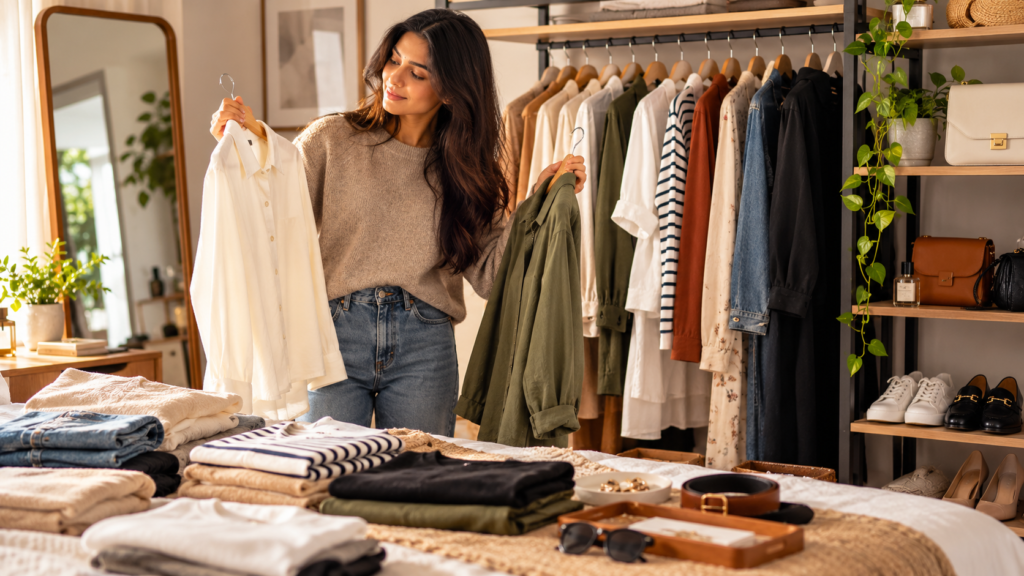
Try laying out your clothes and testing different combinations before deciding what to wear. Taking a quick photograph of combinations you like can also help you remember them for later.
The goal is not to follow strict fashion rules. Choose colours that you enjoy wearing and feel comfortable in.
3. Pay Attention to Fit
The fit of your clothes can make a noticeable difference to your overall appearance. Even a simple outfit may look more polished when the shoulders sit properly, trousers have a suitable length and the clothes feel comfortable.
This does not mean every outfit needs to be tight or tailored. Loose-fitting shirts, wide-leg trousers and relaxed kurtas can look stylish when their proportions work well together.
If a favourite item does not fit properly, consider whether a small alteration could make it more useful. It may be a better option than replacing the entire outfit.
Comfort should remain important. Clothes that allow you to move easily are more practical for everyday wear.
4. Use Accessories to Change the Look
Accessories can help you create variety without buying a complete new outfit. A watch, belt, simple earrings, a scarf or a bag can change the overall feel of clothes you wear regularly.
For example, a plain shirt and jeans may look casual with sneakers and a backpack. The same outfit can feel more put-together with clean shoes, a structured bag and a simple watch.
You do not need to wear several accessories at once. Often, one or two carefully chosen pieces are enough.
Use the accessories you already own and experiment with different combinations. Keeping them organised in one place can also make it easier to choose them when getting ready.
5. Keep Your Clothes Clean and Well-Maintained
Good styling is not only about choosing the right outfit. The condition of your clothes matters too.
Wrinkled shirts, missing buttons, loose threads and dirty footwear can make an otherwise good combination look less polished. Taking a little time to check these details can improve the final result.
Follow the washing instructions on clothing labels, store seasonal items properly and repair small problems when possible. Keep shoes clean and remove lint from fabrics when needed.
You do not need to spend hours maintaining your wardrobe. A few regular habits can help your favourite clothes stay useful for longer.
6. Plan a Few Outfits in Advance
Deciding what to wear at the last minute can make you feel that you need more clothes than you actually do. Planning a few combinations ahead of time can reduce this problem.
Choose outfits for your usual activities, such as office work, college, shopping or meeting friends. Consider the weather and how much walking or movement your day will involve.
You can also keep a small list of combinations that work well for you. For example, one pair of jeans might work with three different tops, giving you several options from a few items.
Planning does not need to become a complicated routine. Even preparing tomorrow’s outfit the previous evening can save time in the morning.
Final Thoughts
Looking well-dressed every day is less about having a large wardrobe and more about using your clothes thoughtfully. Basic combinations, suitable colours, comfortable fits and simple accessories can help you create different looks with what you already own.
Before your next shopping trip, spend a little time exploring your wardrobe. You may discover combinations you have forgotten about or find that a few small changes make your existing clothes feel new again.