Packing for a short trip sounds easy until you open your suitcase and start adding things you might need. An extra pair of shoes, a few backup outfits, full-size toiletries and random items can quickly turn a small bag into a heavy one.
The problem is not always the size of your luggage. Often, it comes down to packing without a clear plan.
Whether you are heading to another city for a weekend, visiting friends or taking a short break from work, packing light can make the journey more comfortable. You spend less time managing your bags and have fewer things to organise when you arrive.
Here are some simple ways to pack for three days without carrying your entire wardrobe.
1. Check Your Trip Before Choosing Clothes
Before opening your wardrobe, think about what you will actually do during the trip. A relaxed family visit requires different clothes from a sightseeing holiday or a weekend with formal plans.
Check the weather forecast, travel arrangements and any activities you have planned. If you expect to walk a lot, comfortable footwear should be a priority. If you have a dinner reservation or an event, set aside one suitable outfit.
Write down the activities for each day and choose clothes accordingly. This small step can prevent you from packing several unnecessary options simply because you are unsure what to wear.
2. Plan Outfits Instead of Packing Individual Pieces
One of the easiest ways to reduce luggage is to plan complete outfits before placing anything in your bag.
Choose clothing items that work well together. For example, a neutral pair of trousers may match two different tops, while a lightweight jacket can work with more than one outfit.
For a typical three-day trip, you might start with three daytime outfits, sleepwear, underwear and one extra top. Adjust the quantity based on the weather, your plans and whether you can wash clothes during the trip.
You do not need a strict number for every item. The aim is to make sure each piece has a clear purpose and can be worn comfortably.
3. Wear Your Bulkiest Items While Travelling
Shoes, jackets and thick sweatshirts can take up a surprising amount of space in a suitcase. If you need them during your trip, consider wearing the bulkiest comfortable items on your journey.
For example, wear your walking shoes instead of packing them alongside another heavy pair. If the weather is cool, travel in your jacket rather than folding it into your bag.
This approach works best when the clothing is comfortable for the journey. There is no point wearing something heavy if you will spend hours feeling too warm or restricted.
For most short trips, one everyday pair of shoes and one additional pair, when genuinely needed, may be enough.
4. Use Small Pouches to Organise Essentials
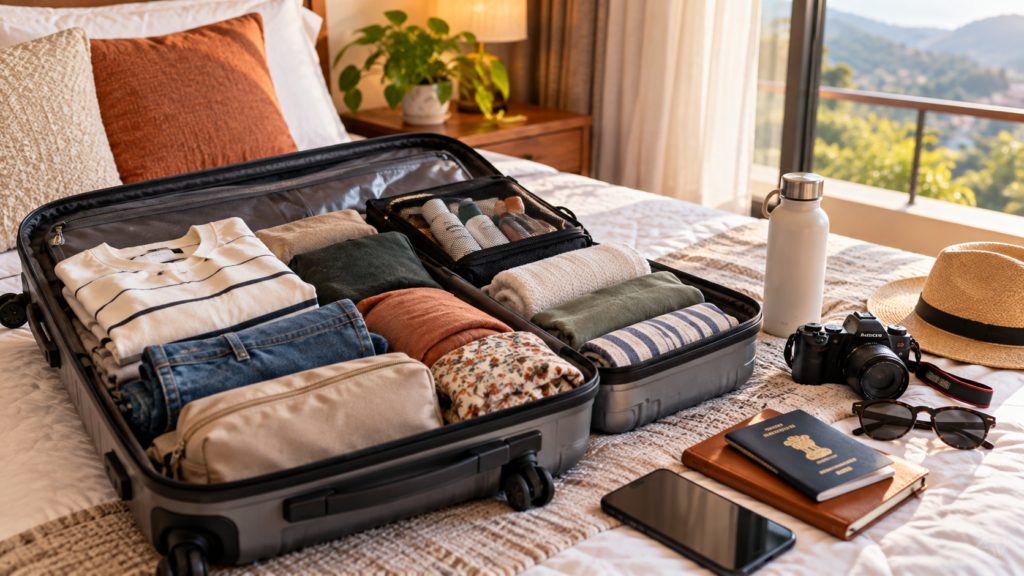
Loose chargers, toiletries, jewellery and other small items can make a bag difficult to organise. Keeping similar things together makes them easier to find.
Use pouches you already have at home. One can hold toiletries, another can hold charging cables and a smaller one can store accessories or medicines you regularly use.
Travel-size containers can also help reduce the space taken up by personal care products. Make sure they are suitable for the products you carry and follow any airline restrictions if you are flying.
Avoid transferring every product you own into your travel bag. Choose the essentials you are likely to use during those three days.
5. Roll Clothes and Fill Empty Spaces
How you arrange your clothes can affect how much space your luggage uses. Rolling softer items can make them easier to fit into a compact bag, although folding may work better for structured clothing.
Place heavier items near the bottom of a suitcase when it is upright. Fill small gaps with socks or other soft items instead of leaving them loose around the bag.
Keep things you may need during the journey, such as a phone charger, tissues or travel documents, somewhere accessible.
Do not force everything into the bag just to make it close. A little spare space makes packing and unpacking easier, especially if you bring home souvenirs.
6. Keep Important Items Easy to Reach
A neatly packed bag is useful, but it should also be practical. You do not want to unpack everything at a railway station or airport just to find your identification or booking details.
Keep travel documents, your phone, wallet and essential medications in a secure, accessible place. If you are flying, check your airline’s rules for cabin baggage, liquids and restricted items before leaving home.
Carry valuable items with you rather than placing them in checked luggage. It is also sensible to keep a copy of important booking information available offline in case your internet connection is unreliable.
These small preparations can save time and help you avoid unnecessary last-minute stress.
7. Do One Final Check Before Leaving
Once your bag is packed, take a quick look at everything inside. Ask yourself whether you will realistically use each item during the trip. Remove duplicate products, extra shoes and backup outfits that do not serve a clear purpose. Check that you have the essentials for your planned activities and the expected weather.
A short checklist can help:
- Clothes and sleepwear
- Underwear and basic toiletries
- Phone charger and necessary electronics
- Identification, tickets and booking details
- Regular medications and other personal essentials
- Weather-appropriate clothing
Your final list will depend on your destination and travel plans, so treat it as a guide rather than a fixed rule.
Travel Light and Enjoy the Journey
Packing for three days does not have to become a long task. Start with your itinerary, plan outfits that work together and carry only what you are likely to use. A smaller, organised bag can make changing transport, walking short distances and settling into your accommodation easier. You may also spend less time searching for things once you arrive.
The best packing routine is not about fitting the maximum number of items into the smallest suitcase. It is about carrying enough to feel prepared without bringing unnecessary weight along for the journey.