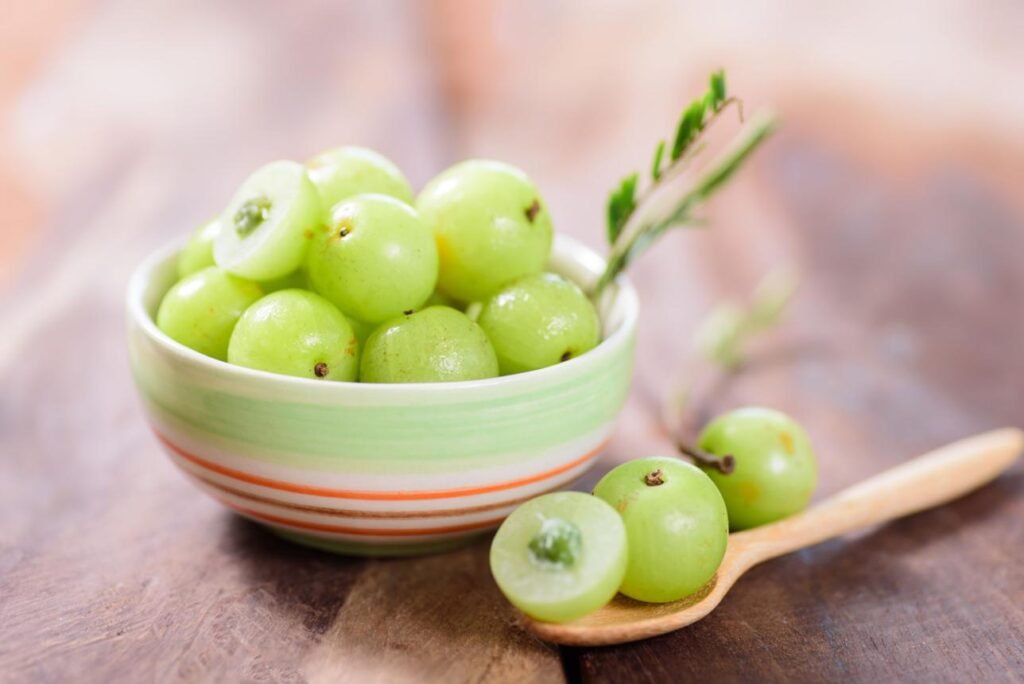
Amla, also known as Indian gooseberry, is a popular fruit used in many Indian homes. It is known for its sour and slightly bitter taste and is often eaten fresh, pickled or added to homemade chutneys. Some people also enjoy it as amla juice or dried candy.
Apart from its traditional use, amla is valued for its nutritional content. It contains vitamin C, fibre and natural plant compounds that can be part of a balanced diet.
The benefits of eating amla make it an interesting addition to everyday meals. However, no single fruit can provide every nutrient the body needs. Eating a variety of seasonal fruits and vegetables remains important.
Here are seven simple reasons to include amla in your food routine.
1. Amla Is a Good Source of Vitamin C
One of the best-known nutritional qualities of amla is its vitamin C content. This vitamin supports the normal functioning of the immune system and helps the body produce collagen.
Collagen is a protein that supports the structure of skin, bones and other body tissues. Vitamin C also helps the body absorb iron from plant-based foods.
Adding fresh amla to your diet can be one way to include more vitamin C. You can eat a small portion with a meal or add it to a homemade chutney.
2. It Contains Natural Antioxidants
Amla contains natural plant compounds, including polyphenols and other antioxidants. These compounds are found in many fruits and vegetables.
Antioxidants help protect the body’s cells from damage caused by unstable molecules known as free radicals. This is one reason why eating a variety of colourful plant foods is often encouraged as part of a balanced diet.
Fresh amla can be enjoyed alongside other seasonal fruits. A varied diet is more useful than depending on one particular food for antioxidants.
3. Amla Provides Dietary Fibre
Fibre is an important part of everyday eating. It supports normal digestion and helps maintain regular bowel movements.
Amla contains dietary fibre, which can contribute to your daily fibre intake. Eating it as a whole fruit rather than relying only on strained juice is a practical way to include its natural fibre.
You can cut fresh amla into small pieces and eat it with a meal. It can also be mixed with other ingredients to prepare a homemade salad or chutney.
4. It Adds Variety to a Balanced Diet
Eating the same foods every day can make meals boring. Amla offers a different taste and texture that can bring variety to your regular food routine.
Its sour flavour works well with ingredients such as coriander, mint, ginger and lemon. You can prepare a simple chutney or add small pieces to a vegetable salad.
Amla can also be used in homemade dishes with dal, roti or rice. These simple combinations make it easier to enjoy different fruits and vegetables throughout the week.
5. It Contains Small Amounts of Important Minerals
Along with vitamin C and fibre, amla provides some minerals that contribute to its nutritional value.
Like other plant foods, it can form part of a varied diet that supplies different nutrients. The body needs a combination of vitamins, minerals, protein, carbohydrates and healthy fats for normal daily functions.
Amla should not be treated as a replacement for other nutritious foods. Include it with vegetables, pulses, whole grains, nuts and other fruits to make your meals more balanced.
6. Amla Can Be Enjoyed in Different Forms
Another useful thing about amla is that it can be prepared in several ways. Fresh amla is a popular choice, but there are other options for people who find its strong taste difficult.
You can prepare homemade amla chutney, add small pieces to salads or use it in certain cooked dishes. Some households also make amla pickle and dried amla snacks.
However, packaged amla candy and sweetened drinks may contain added sugar. It is a good idea to check the ingredient list and enjoy these products in moderation.
7. It Is a Traditional Seasonal Fruit
Amla has a long history in Indian food traditions. It is commonly used in home recipes and traditional preparations, especially during its seasonal availability.
Choosing locally available seasonal fruits can add variety to your meals. Fresh produce is also a useful way to explore different tastes instead of depending only on packaged snacks.
When buying amla, look for fruits that feel firm and have a fresh appearance. Wash them properly before cutting or eating. Store them appropriately to maintain their freshness.
What Is the Best Way to Eat Amla?
There is no single best way to enjoy amla. Fresh pieces, homemade chutney and small portions added to meals are simple options.
If you find the fruit too sour, you can combine it with other ingredients instead of adding large amounts of sugar. People who experience discomfort after eating sour foods may prefer a smaller portion.
Those with specific dietary concerns can seek advice from a qualified health professional before making major changes to their eating habits.
Final Thoughts
Amla is a traditional Indian fruit that offers vitamin C, fibre and natural plant compounds. It can be enjoyed fresh or included in different homemade recipes.
The benefits of eating amla are best considered as part of a balanced diet rather than a reason to depend on one food. A small serving, combined with a variety of fruits and vegetables, can make everyday meals more interesting and nutritious.