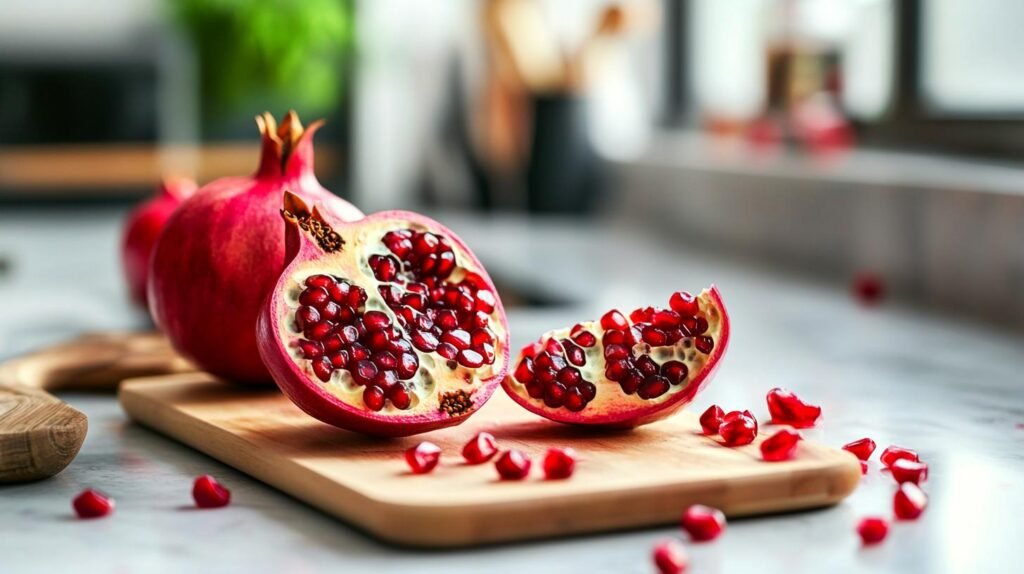
Pomegranate is a popular fruit known for its bright red seeds and sweet-tangy taste. It is commonly enjoyed across India, especially during the winter season, and can be eaten on its own or added to different dishes. Its juicy seeds, also called arils, make it a refreshing snack at any time of the day.
The benefits of pomegranate come from the nutrients and natural plant compounds found in its seeds. It provides fibre, vitamin C, potassium and antioxidants. These nutrients make it a useful addition to a balanced diet.
You do not need to prepare complicated recipes to enjoy this fruit. A small bowl of fresh pomegranate seeds can be added to breakfast, salads or homemade snacks. Here are seven simple reasons to include it in your regular eating routine.
1. Pomegranate Contains Natural Antioxidants
One of the important benefits of pomegranate is its natural antioxidant content. The fruit contains plant compounds called polyphenols, including anthocyanins, which also contribute to its red colour.
Antioxidants help protect the body’s cells from damage caused by unstable molecules known as free radicals. Pomegranate is one of several fruits that can provide these useful plant compounds.
Including different colourful fruits in your diet is a simple way to enjoy a variety of nutrients. You can eat pomegranate along with oranges, apples, guavas and seasonal berries.
2. It Provides Dietary Fibre
Pomegranate seeds contain dietary fibre, which is important for normal digestion. Fibre adds bulk to food and helps support regular bowel movements.
A fibre-rich diet can also help you feel satisfied after meals. This is one reason why eating whole fruits can be a useful part of everyday eating habits.
When enjoying pomegranate, eat the juicy seeds along with their soft inner portions instead of consuming only strained juice. Whole fruit provides fibre that is mostly lost when the juice is separated from the pulp.
3. Pomegranate Provides Vitamin C
Pomegranate contains vitamin C, an essential nutrient that supports normal immune function. It also helps the body produce collagen, which is important for healthy skin, blood vessels and other tissues.
Vitamin C is also involved in helping the body absorb iron from plant-based foods. This can be useful when pomegranate is included as part of meals containing lentils, beans or leafy vegetables.
However, pomegranate should not be treated as the only source of vitamin C. Guava, amla, oranges and other fruits can also contribute to daily vitamin C intake.
4. It Contains Potassium
Potassium is a mineral that the body needs for normal muscle function, nerve signals and fluid balance. Pomegranate provides some potassium and can contribute to overall mineral intake.
Many common foods contain potassium, including bananas, potatoes, beans and leafy vegetables. Eating a variety of these foods is a practical way to include different nutrients in your diet.
You can add pomegranate seeds to a fruit bowl or mix them with a simple vegetable salad for a fresh combination.
5. Pomegranate Adds Colour to Healthy Meals
The bright red seeds can make everyday meals look more colourful and interesting. This is a simple benefit, especially for people who want to add more fruits to their routine.
Pomegranate seeds can be sprinkled over vegetable salads, curd bowls, oats and homemade chaat. Their sweet and slightly tangy taste works well with both sweet and savoury dishes.
You can also combine them with cucumber, carrots and fresh coriander to prepare a quick salad. A little lemon juice can add extra freshness.
6. It Makes a Convenient Snack
Pomegranate is easy to enjoy between meals. Once the seeds are removed from the fruit, they can be stored in a covered container in the refrigerator for a short period.
A small bowl of seeds can be a refreshing alternative to packaged snacks. You can also combine them with nuts or other fresh fruits to make a more filling snack.
If you are carrying them to work or school, keep them in a clean, covered container and use a cool bag when needed.
7. Pomegranate Is Easy to Include in Different Recipes
Another reason to eat pomegranate is its flexibility. The seeds can be used in many simple recipes without much preparation.
Add them to breakfast oats, homemade yoghurt bowls or fruit salads. They can also be sprinkled over chaat, vegetable dishes and rice preparations for a sweet-tangy flavour.
Fresh pomegranate juice is another popular option. However, whole seeds are generally a better choice when you want to include the fruit’s natural fibre in your meal. Avoid adding extra sugar if you prepare juice at home.
How to Add Pomegranate to Your Daily Diet
You can start with a small serving of fresh pomegranate seeds and include them in meals you already enjoy. Add them to breakfast, use them as a salad topping or have them as an afternoon snack.
Choose fruits that feel firm and have an intact outer skin. Wash the fruit before cutting it and store the removed seeds in a covered container in the refrigerator.
Pomegranate is a tasty fruit that provides fibre, vitamins, minerals and natural plant compounds. Enjoying it along with other seasonal fruits and vegetables can make your daily diet more colourful, varied and enjoyable.