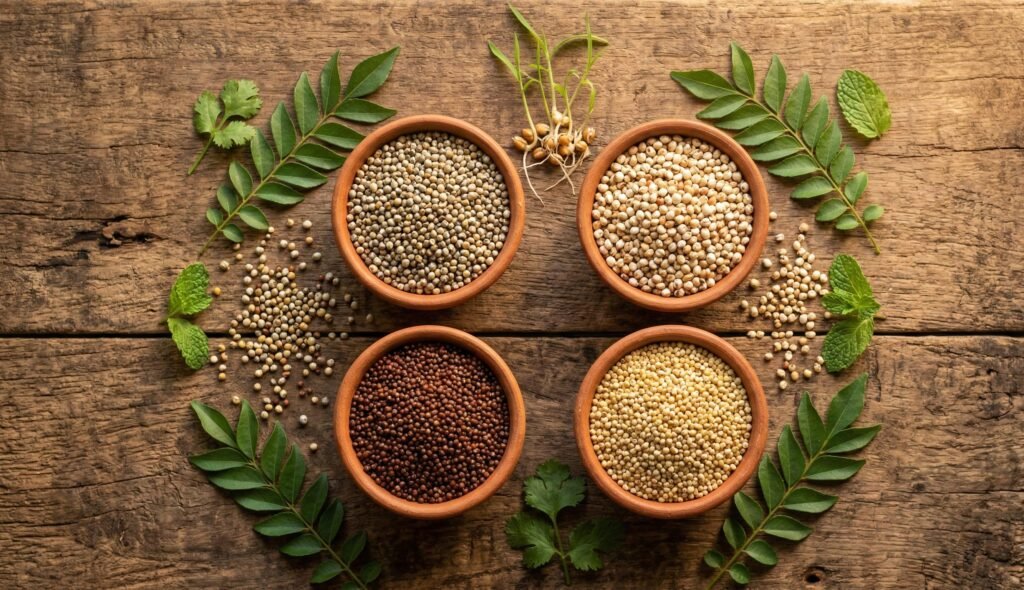
Millets have been part of Indian kitchens for generations. Foods made with jowar, bajra and ragi are still common in many homes, especially in regions where these grains are grown locally.
Today, many people are looking for different ways to include traditional grains in their everyday meals. Millets offer variety and can be used to prepare everything from rotis and porridge to snacks and breakfast dishes.
They are also a source of fibre and other nutrients. However, adding millets to your diet does not mean you have to stop eating rice or wheat completely. You can enjoy them alongside your usual foods and try different recipes according to your taste.
If you are unsure how to use these grains, a few simple ideas can help you get started.
Here are seven easy ways to add millets to your daily diet.
1. Replace Regular Roti With Millet Roti Sometimes
One of the easiest ways to include millets in Indian meals is by preparing rotis with millet flour.
Jowar and bajra are popular choices for making traditional flatbreads. They can be served with dal, seasonal sabzi, curd or homemade chutney.
If you are new to millet rotis, start by replacing wheat roti with a millet option for one meal during the week.
Millet dough can sometimes be more difficult to handle than regular wheat dough. Adding warm water gradually and preparing smaller rotis can make the process easier.
You can also try mixing different flours to find a texture that your family enjoys.
2. Start Your Morning With Ragi Porridge
Ragi, also known as finger millet, is commonly used in different Indian breakfast preparations.
One simple option is ragi porridge. You can prepare it using ragi flour and milk or water, depending on your preference.
For a sweet version, add a little fruit or a small amount of jaggery. You can also prepare a savoury version with mild spices and vegetables.
Ragi porridge is easy to prepare and can be served warm on busy mornings.
If you have not used ragi before, begin with a small quantity and adjust the consistency according to your taste.
3. Try Millet Dosa for Breakfast
Dosa is a familiar breakfast choice in many Indian households. You can also experiment with millet-based dosa batter for a different flavour.
Some recipes use a combination of millet, rice and dal. The ingredients are soaked, ground and fermented before the batter is used.
You can prepare the dosa on a regular pan and serve it with coconut chutney or sambar.
There are different ways to make millet dosa, so you can choose a recipe that suits your cooking routine.
It is also a useful option when you want to bring some variety to your regular breakfast menu.
4. Add Millets to Khichdi
Khichdi is a simple one-pot meal that can be prepared with different grains, pulses and vegetables.
You can use millets such as foxtail millet or little millet instead of rice in some khichdi recipes.
Combine the grain with moong dal, seasonal vegetables, turmeric and mild spices. Cook everything until the ingredients become soft.
The final dish can be served with curd or a small portion of homemade pickle.
This is a practical way to experiment with millets without preparing an entirely different meal for the family.
5. Make Homemade Millet Snacks
Millets can also be used to prepare snacks at home.
You can try baked millet crackers, roasted millet mixtures or small vegetable cutlets made with millet flour. These options can bring variety to your evening snack routine.
For example, you can mix cooked millet with mashed vegetables, mild spices and a little flour to prepare cutlets.
Cook them on a pan with a suitable amount of oil instead of always choosing deep-fried snacks.
Homemade snacks also allow you to adjust the ingredients according to your family’s preferences.
6. Use Millet Flour in Chilla
Besan chilla is a popular breakfast and snack option, but you can try different flour combinations to change its taste.
Add a little jowar or ragi flour to the batter along with besan, chopped onion, tomato, coriander and spices.
Mix everything with water to make a smooth batter and cook small chillas on a pan.
You can serve them with curd, green chutney or a simple homemade dip.
This is an easy way to use millet flour without making a separate dish from scratch.
7. Prepare Millet Pulao for Lunch
If your family enjoys pulao, try preparing it with foxtail millet or another suitable millet instead of rice.
Wash the grain and cook it according to the instructions for that variety. Add vegetables such as peas, carrots, beans and cauliflower with mild spices.
Serve the pulao with curd or raita for a simple lunch.
The cooking time and amount of water can differ between millet varieties, so follow the packet instructions or a reliable recipe.
You can experiment with different vegetables and seasonings to find a combination that everyone enjoys.
Make Millets Part of Your Regular Food Routine
Adding millets to your diet does not require a major change in your kitchen. You can begin with one or two recipes and gradually try different varieties.
Jowar, bajra, ragi and other millets have their own flavours and cooking methods. Some may take a little practice before you get the texture right.
It is also important to maintain variety in your meals. Millets can be part of a balanced diet alongside vegetables, pulses, fruits and other familiar foods.
Choose grains that are easily available and suit your taste. Small changes in everyday cooking can help you enjoy more traditional food options without making your meals complicated.