Packing lunch every day can become a routine task, especially when mornings are busy. Many people end up preparing the same food again and again because they do not have enough time to think of new options.
However, a lunchbox does not need to be complicated to be healthy. A few simple changes in the way you plan and prepare meals can make everyday lunches more balanced and enjoyable.
Whether you are packing food for work, school or college, try to include different food groups instead of depending on only one item. Fresh ingredients, homemade meals and sensible portions can make a useful difference to your daily food habits.
You also do not need expensive ingredients or special recipes. Many familiar Indian foods can be part of a balanced lunchbox.
Here are seven simple ways to make your everyday lunchbox healthier.
1. Include Different Food Groups
One of the easiest ways to improve your lunchbox is to include a variety of foods.
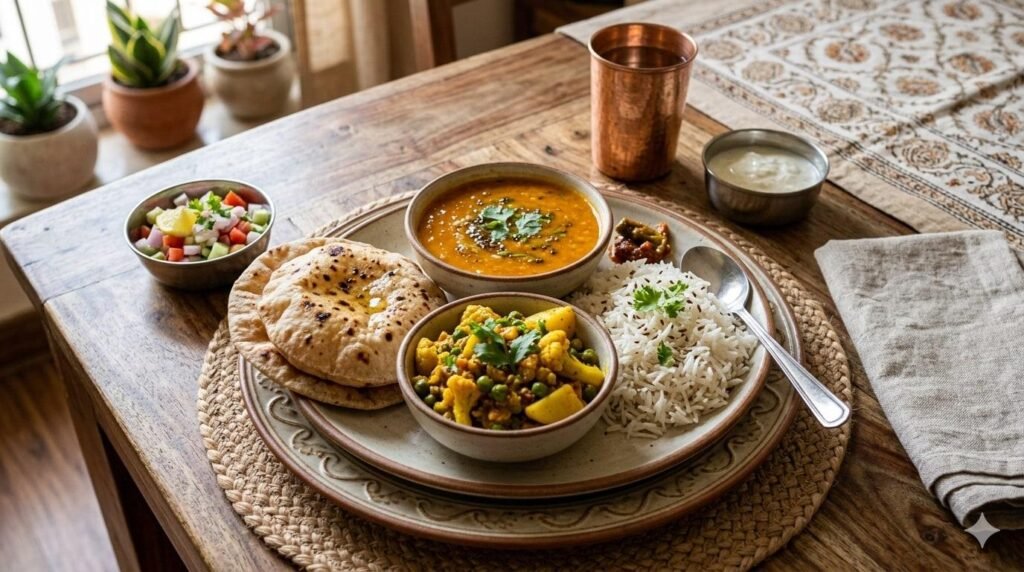
Instead of packing only roti or rice, try adding a vegetable dish, dal, curd or another suitable source of protein. This helps bring different nutrients to your meal.
For example, you can pack two rotis with seasonal sabzi and a small portion of dal. Rice with rajma, vegetables and curd is another simple option.
The exact combination can change according to your preferences and food habits.
A little variety can make lunch more satisfying and prevent you from depending on the same food every day.
2. Add Fresh Vegetables
Vegetables are an important part of everyday meals. They provide fibre, vitamins and minerals, and can make your lunchbox more colourful.
You can include seasonal vegetables in several easy ways. Add cucumber and carrot slices, prepare a simple vegetable sabzi or mix peas, beans and carrots into pulao.
If you do not enjoy eating raw vegetables, cooked options are equally useful for bringing variety to your meal.
Try changing the vegetables throughout the week instead of packing the same ones every day. This also gives you an opportunity to use locally available seasonal produce.
Remember to wash fresh vegetables properly before cutting and packing them.
3. Choose Homemade Food More Often
Packaged snacks and ready-to-eat foods may seem convenient when you are short on time. However, regularly depending on them can reduce the variety of fresh foods in your meals.
Homemade food gives you more control over the ingredients and the amount of salt, sugar and oil used during preparation.
You can pack simple dishes such as vegetable poha, homemade parathas, dal rice, idli, besan chilla or vegetable pulao.
These options do not require complicated cooking methods. Preparing a few ingredients in advance can also make morning cooking easier.
Try to keep packaged foods as occasional choices rather than making them the main part of your daily lunch.
4. Include a Protein-Rich Food
Protein is an important part of a balanced meal. Including a suitable protein source in your lunchbox can make the meal more varied and satisfying.
There are several simple options for Indian households. Dal, chickpeas, rajma, paneer, curd, eggs and sprouts can all be included according to your food preferences.
For example, you can pack paneer bhurji with roti, chana salad or a bowl of dal with rice.
If you prefer a vegetarian lunch, changing between different pulses, beans and dairy products can bring variety to your meals.
You do not need to prepare a separate dish every day. Even a small addition can improve the overall balance of your lunchbox.
5. Pack Whole Fruits for a Simple Side
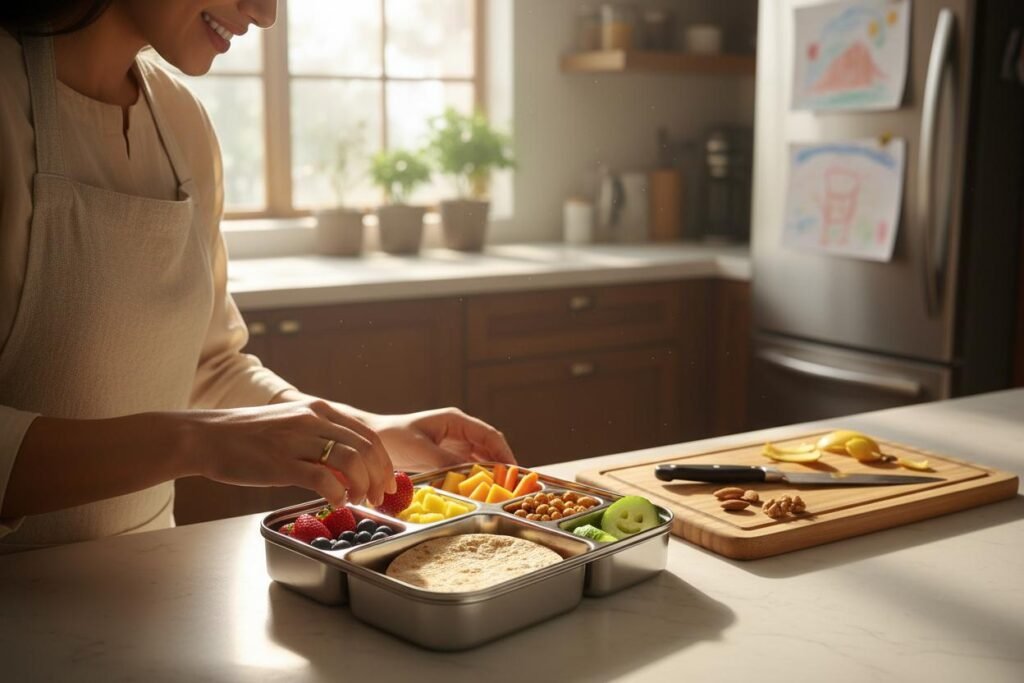
A whole fruit can be an easy addition to your lunchbox. It offers natural sweetness and helps bring more variety to your daily food choices.
Bananas, apples, oranges, guava and seasonal fruits are convenient options. Choose fruits that are easy to carry and suitable for the time you will eat them.
Wash fruits before packing them. If you are cutting them into pieces, use a clean container with a secure lid.
Try to choose whole fruits instead of regularly depending on packaged fruit drinks or sweetened beverages.
You can also change your fruit choices during the week to enjoy different flavours.
6. Avoid Packing Too Many Fried Snacks
Fried snacks such as chips, namkeen and samosas are popular lunchbox additions. However, making them a regular part of lunch may leave less space for other useful food choices.
Instead, try adding roasted chana, homemade dhokla, boiled corn, a small portion of nuts or a simple vegetable sandwich.
You can still enjoy your favourite snacks occasionally. The idea is to create a better balance rather than completely avoiding foods you like.
Pay attention to portion sizes too. Packing a reasonable amount of food can help reduce leftovers and unnecessary food waste.
7. Pack and Store Food Properly
A healthy lunchbox also depends on how food is handled and stored.
Always use clean containers with secure lids. Wash lunchboxes properly after every use and allow them to dry before storing them.
Let freshly cooked food cool appropriately before packing it, but do not leave perishable food at room temperature for long periods. Foods such as curd, paneer, cooked rice and other dairy-based dishes need extra care, especially in warm weather.
Use an insulated lunch bag and an ice pack when needed to keep perishable food at a safe temperature. Follow suitable food storage practices if the lunch will not be eaten soon after preparation.
Good packing habits help keep everyday meals fresh and enjoyable.
Make Your Lunchbox Better With Small Changes
Preparing a healthier lunchbox does not require a complete change in your daily routine. Start by adding one vegetable, including a protein source or carrying a whole fruit.
Plan a few meals in advance so you do not have to decide everything during busy mornings. You can also prepare ingredients the previous evening to save time.
Most importantly, choose foods that you enjoy and can comfortably include in your regular routine.
A little planning and variety can make your everyday lunchbox more balanced, fresh and interesting.