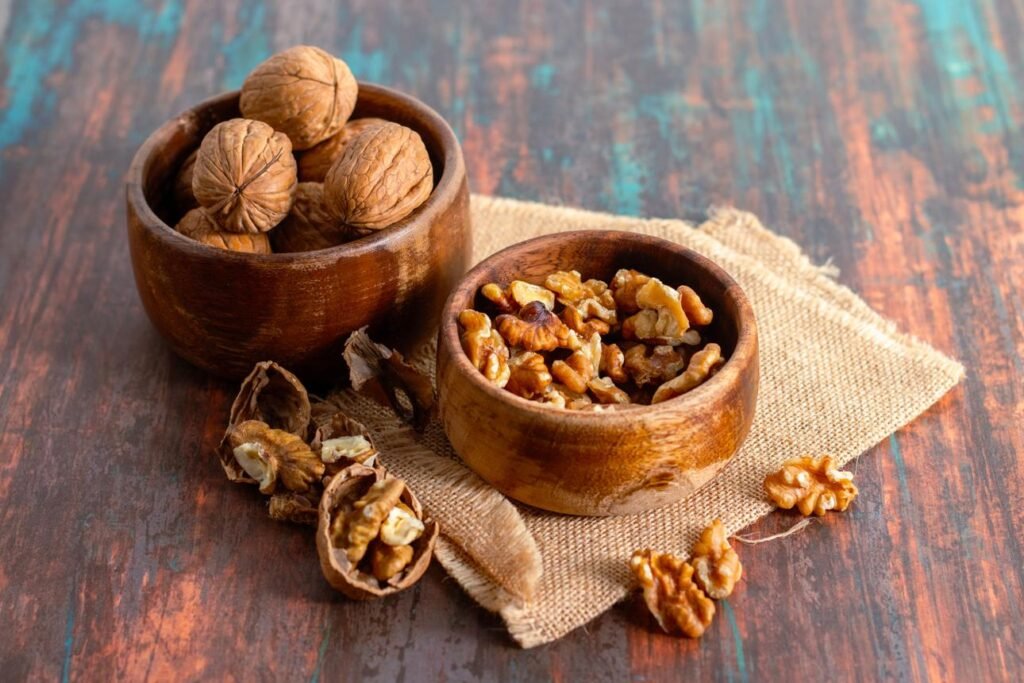
Walnuts are among the most popular nuts enjoyed in Indian homes. Their slightly bitter taste and crunchy texture make them a good addition to breakfast, snacks and homemade desserts. They are often eaten on their own or mixed with almonds, raisins and other dry fruits.
Apart from their taste, walnuts contain several useful nutrients. They provide healthy unsaturated fats, plant-based protein, fibre and minerals. They are also known for containing omega-3 fatty acids, particularly alpha-linolenic acid (ALA), which is found in plant foods.
Adding a small portion of walnuts to your daily food routine can be an easy way to include more variety in your diet.
Here are seven reasons why walnuts can be a useful addition to everyday meals.
1. Walnuts Contain Healthy Fats
One of the main nutritional features of walnuts is their fat content. Most of the fat in walnuts is unsaturated fat, including the plant-based omega-3 fatty acid ALA.
Unsaturated fats are commonly included in balanced eating patterns. They are found in several foods, such as nuts, seeds and certain vegetable oils.
You can enjoy walnuts as a snack or add chopped pieces to your breakfast bowl. Eating a variety of nuts and seeds is a simple way to include different sources of healthy fats in your meals.
2. They Provide Plant-Based Protein
Protein is an important nutrient that helps the body build and maintain muscles. It also supports several normal body functions.
Walnuts contain plant-based protein, which makes them a useful addition to meals and snacks. Although they should not be treated as a complete protein source on their own, they can contribute to your overall daily intake.
Try adding chopped walnuts to a bowl of curd, oats or homemade porridge. You can also combine them with almonds and seeds for a simple snack.
3. Walnuts Offer Dietary Fibre
Dietary fibre plays an important role in everyday eating. It supports normal digestion and helps maintain regular bowel movements.
Walnuts contain fibre, which adds to their nutritional value. Including fibre-rich foods such as fruits, vegetables, pulses, whole grains and nuts can help make your diet more varied.
You can sprinkle chopped walnuts over a fruit bowl or mix them into homemade breakfast dishes. A small portion is usually enough to add crunch and flavour.
4. They Contain Important Minerals
Walnuts provide minerals such as magnesium, copper and manganese. These nutrients take part in different normal processes in the body.
Magnesium supports normal muscle and nerve function, while copper and manganese are involved in several body processes.
A varied diet is important for getting different minerals from food. Walnuts can be one part of that diet, along with leafy vegetables, beans, whole grains and other nuts.
5. They Add Antioxidant Compounds to Your Diet
Walnuts contain natural plant compounds, including polyphenols. These compounds are found in many plant-based foods and are part of a varied diet.
The thin brown skin around a walnut also contains several of these natural compounds. For this reason, many people prefer eating walnuts with their skin rather than removing it.
Other foods such as berries, vegetables, fruits and whole grains also provide different plant compounds. Eating a variety of these foods is more useful than depending on a single ingredient.
6. They Make a Convenient Everyday Snack
Walnuts are easy to carry and do not need cooking or special preparation. This makes them a convenient option when you want something small between meals.
You can keep a small container of walnuts in your kitchen or office bag. They can also be mixed with roasted chana, almonds or a few raisins to prepare a homemade snack.
Choose plain walnuts instead of varieties covered with extra sugar, salt or flavouring. Since walnuts are energy-dense, enjoy them in moderate portions.
7. They Can Make Everyday Recipes More Interesting
Walnuts are not limited to eating as dry fruits. Their mild flavour and crunchy texture work well in several sweet and savoury dishes.
Add chopped walnuts to vegetable salads, fruit bowls or homemade sandwiches. You can also use them as a topping for oats, curd and porridge.
For a simple homemade spread, blend walnuts with a little olive oil, garlic and herbs. It can be used with bread or as a dressing for salads.
They can also be added to traditional sweets and homemade desserts. Using moderate amounts helps keep the overall meal balanced.
How Many Walnuts Should You Eat?
Walnuts are nutritious, but they are also high in calories. A small handful or a few whole walnuts can be a suitable starting point for many people, depending on their overall diet and needs.
You do not need to eat them at a particular time of day. Enjoy them with breakfast, as an afternoon snack or as part of a meal.
People with nut allergies should avoid walnuts. Choose fresh nuts that do not have an unusual smell or signs of spoilage. Store them in an airtight container in a cool, dry place to maintain their quality.
Final Thoughts
Walnuts are a simple food that provides unsaturated fats, plant-based protein, fibre and useful minerals. They are easy to include in everyday Indian meals and can be enjoyed in both sweet and savoury recipes.
Eating a moderate portion along with fruits, vegetables, pulses and whole grains can add variety to your daily food routine. Small and practical food choices can make balanced eating easier to maintain.